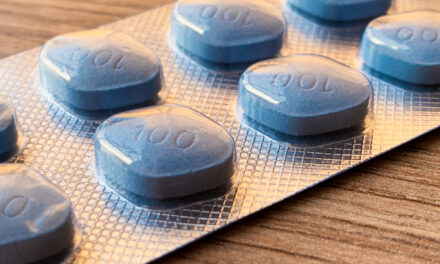
Cialis (tadalafil) has no single labeled onset time. The FDA-approved label says to take the as-needed tablet prior to anticipated sexual activity, and the manufacturer’s patient information says you may be able to have sexual activity at 30 minutes. Blood levels peak at a median of about 2 hours, and sexual stimulation is still required for it to work.
If you’ve typed “how long does Cialis take to work” into a search bar, you’re probably trying to plan: when to take the tablet, whether to wait, and what it means if nothing seems to happen at the 30-minute mark. The honest answer is that no single number fits everyone. Cialis is a PDE5 inhibitor (phosphodiesterase type 5 inhibitor), a medicine that helps the blood vessels in the penis relax and fill when you’re aroused. How quickly that adds up to a firm erection depends on you, the dose, and the situation.
This guide stays on one question, the start of the effect. It covers what the FDA-approved labeling does and doesn’t say about timing, how blood-level numbers differ from what you actually feel, why arousal is part of the equation, and what changes with daily low-dose use. How long the effect lasts is a separate subject, covered in how long Cialis lasts. The broader drug comparison lives in sildenafil vs. tadalafil, and the shorter-acting tablet’s onset is covered in how long Viagra takes to work.
Two ideas will help as you read. First, a median is not a promise: a figure such as “2 hours” describes a group of men, not you on a particular night. Second, a medicine that seems slow isn’t always slow; sometimes the missing piece is stimulation, relaxation, or a dose conversation with a clinician. Nothing here is a prescription or a substitute for one. If you’re still weighing regimens, daily vs as-needed tadalafil lays out how they differ.
- The Cialis label gives no fixed onset time for as-needed use; it says to take the tablet prior to anticipated sexual activity.
- Patient pages describe roughly 30 minutes to an hour as a planning range, and the manufacturer’s leaflet says you “may be able” to have sex at 30 minutes.
- In the label’s stopwatch trial, 52% of men on 20 mg reported a successful erection by 30 minutes versus 35% on placebo, so many men needed longer.
- Peak blood level (median 2 hours, range 30 minutes to 6 hours) is not the same thing as onset, and food does not change absorption.
- Tadalafil has no effect without sexual stimulation, and daily dosing is taken without timing it to sex.
How Long Does Cialis Take to Work? The Short Answer and Its Limits
Timing questions about Cialis get tangled because different sources use different yardsticks: a regulatory label, a patient leaflet, a clinic web page, and a clinical trial that used a stopwatch. This section lays those yardsticks side by side so you can see where they agree, where they differ, and what the one stopwatch study in the labeling does and doesn’t show.
What the sources say about onset
Start with the wording itself. The label, the manufacturer’s patient leaflet, and the major medical pages each phrase the answer a little differently, and the differences are informative rather than contradictory.
The label’s wording: before anticipated sexual activity
The FDA-approved Cialis label on DailyMed (revised 3/2026) doesn’t give one fixed onset time for everyone. For as-needed use, the dosing section describes the tablet as taken prior to anticipated sexual activity. The starting dose it describes for most patients is 10 mg, which may be increased to 20 mg or decreased to 5 mg based on individual efficacy and tolerability, with a maximum frequency of once per day in most patients. The prescriber, not the reader, sets the dose for an individual.
That phrase leaves room on purpose. Tadalafil’s labeled effect window is long, so the label stresses the order of events (take it ahead of time, then have sexual activity) rather than a countdown. The pharmacology section does give one timing figure, the peak blood level, which we’ll unpack in the next major section. It doesn’t turn that figure into “wait exactly this long.” If you want a stopwatch answer, the labeling itself won’t hand you one, which is why clinicians usually talk in ranges and ask how your first few doses went.
The 30-minute and one-hour figures from patient pages
Patient-facing pages give friendlier numbers. The manufacturer’s FDA-approved patient information (revision date 05/2017) says you may be able to have sexual activity at 30 minutes after taking Cialis and up to 36 hours after taking it. MedlinePlus says tadalafil is usually taken at least 30 minutes before sexual activity and not more often than once every 24 hours. Mayo Clinic describes taking it an hour before sex, and Cleveland Clinic says oral ED medicines in general start to work within an hour.
Put together, about 30 minutes to an hour is a common planning range, and the words “may be able” matter because they describe a possibility, not a switch. The table below sets the sources next to one another so the spread is easy to see.
| Source | What it says about timing | Type of source |
|---|---|---|
| FDA-approved label | Taken prior to anticipated sexual activity; no fixed minutes stated | Regulatory prescribing information |
| Lilly patient information | May be able to have sexual activity at 30 minutes | Manufacturer’s patient leaflet |
| MedlinePlus | Usually at least 30 minutes before sexual activity | Government patient drug page |
| Mayo Clinic | Taken an hour before sex | Medical center patient page |
| Cleveland Clinic | Oral medications start to work within an hour | Medical center patient page |
Source note: FDA-approved Cialis label (DailyMed, revised 3/2026); Lilly patient information (05/2017); MedlinePlus (04/15/2023); Mayo Clinic (January 21, 2026); Cleveland Clinic (08/28/2023). These are descriptions of typical use, not guarantees for any one person, and the Cleveland Clinic statement covers oral ED medicines as a group.
What the label’s stopwatch trial shows
The label does contain one place where timing was actually measured by the men themselves. It’s worth understanding in detail, because it’s often quoted without the context that makes the numbers meaningful.
How the stopwatch study worked
In section 14.1 of the Cialis label, one randomized, double-blind, placebo-controlled trial enrolled 223 men with erectile dysfunction (ED) and assigned them to placebo, Cialis 10 mg, or Cialis 20 mg. Using a stopwatch, the men recorded how long after dosing a successful erection occurred. The label defines a successful erection as at least 1 erection in 4 attempts that led to successful intercourse.
That design is unusually direct, because most ED trials ask about outcomes over weeks rather than minutes. It’s also one study among the 22 clinical trials the label summarizes for ED. A single trial with a few dozen men per group can show a pattern, but it can’t pin down a precise onset time for the wider population, and the men were timing themselves rather than being observed. Treat the result as a useful data point, not a rule.
Reading the percentages carefully
Here’s the figure the label reports: at or before 30 minutes, 35% of men on placebo, 38% on 10 mg, and 52% on 20 mg reported a successful erection. Two things stand out. First, the placebo group wasn’t near zero, which is common in ED research because arousal, expectation, and relaxation all matter. Second, the 10 mg group sat only 3 percentage points above placebo at that early mark, while the 20 mg group sat 17 points above.
What this doesn’t tell you is just as important. The percentages describe the 30-minute mark only, so they say nothing about how many men would have had a successful erection at 45 minutes or two hours. They don’t mean 10 mg “doesn’t work,” and they aren’t a reason to ask for a higher dose; dose is a clinician’s decision. The honest takeaway is that some men respond within 30 minutes and many need longer or different conditions.
How Tadalafil Moves From Tablet to Effect
Once you swallow a Cialis tablet, a chain of events begins: absorption into the blood, a rise to a peak, and, if you’re aroused, a change in blood flow. Each step has its own clock. Separating them explains why one source says 30 minutes and another says 2 hours, and why both statements can be accurate at the same time.
Absorption and the peak blood level
Absorption comes first. The label gives a peak blood-level range, and it’s easy to misread that range as the moment the medicine “kicks in,” so it helps to see what the number measures.
The median peak at about 2 hours
The pharmacology section of the Cialis label states that the maximum observed plasma concentration (Cmax) of tadalafil is reached between 30 minutes and 6 hours, with a median of 2 hours. Plasma is the liquid part of your blood, and Cmax is simply the highest level measured after a dose. The label also says absolute bioavailability, meaning how much of a tablet reaches the bloodstream compared with an injected dose, has not been determined.
A median is the middle value: about half of the men in the measurements peaked sooner than 2 hours and about half later. The range is wide, so one man’s peak might come within half an hour and another’s might take several hours. That spread is one reason a single onset number can’t be right for everyone, and it’s why the label doesn’t offer one.
Blood level versus the effect you feel
A peak blood level is a laboratory measurement, not a feeling. Your erection responds to how much tadalafil is present, but also to arousal, relaxation, circulation, and the many other factors that shape any erection. Because the median peak is about 2 hours, most men’s blood levels are probably still rising at the 30-minute mark, yet the label’s stopwatch trial shows some men reporting a successful erection by then. Enough drug, not peak drug, is what matters first.
The peak also isn’t a “best moment.” With a mean half-life of 17.5 hours in healthy subjects, according to the label, tadalafil levels fall slowly after the peak, so there’s no cliff right behind it. For how that long tail relates to the effect window, see how long Cialis lasts. The graphic below separates the steps that happen between tablet and effect.
Why arousal belongs in the timing conversation
Even with plenty of drug in your system, tadalafil doesn’t work like a light switch. The label is explicit about one condition that no clock can replace.
Sexual stimulation and the nitric oxide step
Section 12.1 of the label explains the mechanism in clinical language: because sexual stimulation is required to initiate the local release of nitric oxide, the inhibition of PDE5 by tadalafil has no effect in the absence of sexual stimulation. In plain terms, arousal is what sends the chemical “open up” signal in penile blood vessels, and tadalafil helps that signal do its job by blocking the enzyme PDE5. Without the signal, there’s nothing for the medicine to support.
This is why Cialis is not a desire pill and doesn’t produce an erection on its own. The NIDDK describes PDE5 inhibitors as oral medicines that improve blood flow to the penis and may help you get and keep an erection. The word “help” carries real weight: the tablet supports a response, and arousal starts it. Any honest answer to “how long does it take” has to assume that stimulation is part of the picture.
Why watching the clock can backfire
Knowing that stimulation matters changes how to think about the 30-minute mark. If you swallow a tablet, then sit and wait for something to happen, you’ve removed the one ingredient the label says is required. Worse, watching the clock can feed worry about performance, and worry itself can dampen arousal. That loop is common enough to have its own article: sexual performance anxiety explains how it builds and how it’s addressed.
A practical way to take the pressure off is to separate the two jobs. The tablet’s job is to be in your system ahead of time; your job, if you choose, is to let intimacy unfold without a deadline. Many men find that planning for a stretch of hours rather than a single minute makes the whole thing less tense. If anxiety is a big part of the picture, say so at your visit, because it changes which next steps make sense.
Food, Alcohol, and Other Things That Might Change Timing
Timing questions often turn into “what if” questions: what if I just ate, had a drink, or take another medicine? Some answers are reassuring and some call for a pharmacist or prescriber. This section separates what the labeling says about absorption from what it says about safety, because the two are easy to blur and they deserve different levels of caution.
Food and alcohol
Meals and drinks are the most common variables people ask about. Tadalafil’s labeling treats them differently, and the difference is worth knowing before a dinner out.
Food: what the label says about absorption
The label states that the rate and extent of absorption of tadalafil are not influenced by food, so Cialis may be taken with or without food. The manufacturer’s patient information repeats that it may be taken with or without meals, and MedlinePlus says the same. In practical terms, a large dinner isn’t described as delaying the start of tadalafil the way it can with some other tablets.
That doesn’t mean a heavy meal has no effect on the evening. Feeling full, sleepy, or tired can change how interested you are, and that’s separate from absorption. If you want the detail on mealtimes, tadalafil and food covers it, and the sildenafil situation has its own labeling and its own article because that medicine differs. Don’t carry food rules from one drug to another.
Alcohol: a blood pressure question more than a timing question
On alcohol, the label’s concern is safety. Section 5.9 says substantial consumption of alcohol (for example, 5 units or greater) in combination with Cialis can increase the potential for orthostatic signs and symptoms, which are dizziness or lightheadedness when you stand up. The manufacturer’s patient information puts it in everyday terms: don’t drink too much, such as 5 glasses of wine or 5 shots of whiskey.
We didn’t find a labeled statement that alcohol delays or speeds onset, so we won’t claim one. What matters is that heavy drinking and tadalafil together raise a blood-pressure risk. A light drink isn’t addressed by those numbers, but your prescriber knows your health history and can tell you what’s sensible.
Medicines and body factors
Beyond food and drink, other medicines and your own physiology can change how much tadalafil you’re exposed to or how your blood pressure responds. Some items on this list are absolute rules.
Other medicines that change how much tadalafil you get
Tadalafil is processed mainly by a liver enzyme called CYP3A4, so medicines that block or speed up that enzyme matter. For strong blockers such as ketoconazole and ritonavir, the label sets lower maximums: for as-needed use, 10 mg not more than once every 72 hours, and for daily use, 2.5 mg. The label also reports that rifampin, an enzyme-speeding antibiotic, reduced exposure after a single 10 mg dose by 88%, and that its effect on daily-use efficacy is unknown. Blood pressure medicines add to tadalafil’s mild blood-vessel widening, and for men stable on an alpha blocker the label says PDE5 inhibitors should be started at the lowest recommended dose.
| Item | What the labeling says | Why it matters for you |
|---|---|---|
| Nitrates (any form) | Contraindicated | Combined use can cause a dangerous blood pressure drop |
| Riociguat (a guanylate cyclase stimulator) | Do not use together | Same type of blood pressure risk |
| Alpha blockers and other blood pressure medicines | Additive blood pressure lowering; lowest recommended dose when starting on an alpha blocker | A prescriber should plan the combination |
| Strong CYP3A4 blockers | Lower maximum dose and longer gaps | Exposure can rise |
| Rifampin | Single-dose exposure fell 88%; daily-use effect unknown | May affect how well it works |
| Heavy alcohol (5 units or more) | Can increase dizziness on standing | A safety issue, not an onset rule |
Source note: FDA-approved Cialis label (DailyMed, revised 3/2026); Lilly patient information (05/2017). Not a complete interaction list. Tell your prescriber and pharmacist about every medicine and supplement you use.
Cialis is contraindicated with any form of organic nitrate, including nitroglycerin used for chest pain and nitrate “poppers.” The combination can cause a dangerous drop in blood pressure. The label says that if a nitrate becomes medically necessary in a life-threatening situation, at least 48 hours should pass after the last Cialis dose before it is considered. If you’re ever in an emergency, tell responders you took tadalafil. Read more in ED medication and nitrates.
Age, kidney, and liver factors
The label also describes how your body can change exposure. In men aged 65 and older, tadalafil exposure (AUC, the total drug over time) was about 25% higher with no change in peak concentration, and no dose adjustment is recommended for age alone. In men with diabetes, exposure after a 10 mg dose was about 19% lower, also with no dose adjustment. Kidney and liver function, however, do change the limits: the label sets lower maximum doses and longer gaps between doses when kidney function is reduced, caps the dose for mild to moderate liver impairment, and does not recommend Cialis in severe liver impairment.
None of these adjustments is described as moving onset to a different fixed time. They concern how much and how often, which is the prescriber’s territory. If you have kidney, liver, or heart conditions, mention them early, because they shape which regimen is reasonable. The label also advises against these treatments for men whose cardiovascular status makes sexual activity inadvisable, and your clinician is the one to judge that.
Daily Tadalafil and the Question of Onset
Daily dosing turns the original question on its head. Instead of asking how long a single tablet takes, the question becomes whether the medicine is already in your system when the moment arrives. Understanding that shift clears up a lot of confusion about timing, including why daily labeling says nothing about pre-sex waiting.
How the daily pattern changes the question
The daily pattern is a different way of using the same medicine, with its own instructions. Those instructions tell us what “onset” does and doesn’t mean in that setting.
No pre-sex timing in the daily instructions
For once-daily use, the label’s recommended starting dose is 2.5 mg, which may be increased to 5 mg based on individual efficacy and tolerability. The key timing phrase is that the tablet is taken at approximately the same time every day, without regard to timing of sexual activity. MedlinePlus uses nearly the same words, and the clinical trials behind this regimen did not restrict when sex happened relative to the dose, according to section 14.2 of the label.
So a person on the daily regimen isn’t supposed to take a tablet and then count minutes. The countdown question mostly disappears, because tadalafil is already present. What the label doesn’t give is a number of hours or days until the “daily” effect is established, so ask your prescriber what to expect in the first weeks rather than relying on a forum’s number.
Steady state after about five days
The label states that steady-state plasma concentrations of tadalafil are attained within 5 days of once-per-day dosing, with exposure about 1.6-fold greater than after a single dose, and describes daily use as providing continuous plasma levels. Steady state means the amount you take in each day roughly matches what your body clears, so the blood level stops climbing and levels off.
Be careful with what that number means. Five days describes blood levels, not the day you’ll notice a result. It’s a pharmacology fact, not a promise about erections, and the label doesn’t convert it into an expected response date. It does explain why daily dosing feels different from as-needed dosing: instead of a rise and fall around each tablet, the level stays comparatively steady. The two patterns are compared side by side in the next section.
Choosing and reviewing a pattern
Choosing between daily and as-needed use is a shared decision. The timing story is one input among several, along with how often you expect to have sex, other health conditions, cost, and preference.
What the labeling says about each regimen
The table below summarizes how the two labeled ED patterns differ on timing-related points. It describes the labeling, not a recommendation, and the prescriber sets the dose for an individual.
| Point | As needed | Once daily |
|---|---|---|
| Labeled starting dose for ED | 10 mg | 2.5 mg |
| When to take it | Prior to anticipated sexual activity | About the same time every day, without regard to sexual activity |
| Dose range described | May go to 20 mg or down to 5 mg | May be increased to 5 mg |
| Dosing frequency | Maximum once per day in most patients | Once per day |
| Blood-level pattern | Rises, peaks (median about 2 hours), then falls | Steady state within 5 days |
Source note: FDA-approved Cialis label (DailyMed, revised 3/2026), sections 2.1, 2.2, 12.3 and 14.2; Lilly patient information (05/2017). Starting doses are labeled starting points, not instructions for any individual.
Notice what’s missing from the daily column: any instruction to wait. Both regimens are approved for ED, and the label also lists benign prostatic hyperplasia (BPH, an enlarged prostate) among its indications. Choosing between them is a values-and-health-history conversation.
For the onset question specifically, the practical difference is where the planning burden sits. With as-needed use, you or your partner plan around a window that starts after the tablet is taken. With daily use, the planning happens once, when you and your prescriber agree on a time of day, and after that the medicine is simply part of your routine. Neither pattern removes the need for arousal, and neither is labeled as faster. Which one fits depends on how often you expect to be intimate, your other medicines and conditions, and what you’d rather not think about.
Missed doses and the daily clock
People on daily dosing often ask what happens if a dose slips. The manufacturer’s patient information says that if you miss a dose, you may take it when you remember, but you should not take more than one dose per day. That one-dose-per-day ceiling is the part to hold onto.
Notice what that guidance doesn’t say. It doesn’t suggest doubling up the next day or taking extra tablets to catch up. If missed doses are frequent, that’s useful information to bring to your prescriber, who might talk about a more convenient time of day or about whether as-needed dosing fits your life better. Never adjust your regimen on your own, and don’t stop a prescribed medicine without talking to your clinician first.
Planning Around Onset in Real Life
Labels and trials give averages, but you live in a specific evening with specific plans. Turning timing information into a workable plan means accepting a range, watching how your own body responds, and keeping safety limits in view. This section translates the numbers into everyday decisions without pretending they can be tuned like a stopwatch.
The practical clock
Practical planning starts from the sources’ agreement: roughly 30 minutes to an hour for many men, with a long window afterward. Within that frame, the details are personal.
A planning range, not a stopwatch
The most useful way to hold the sources’ numbers is as a planning range with a long runway. Patient pages point to about 30 minutes to an hour, the label’s peak-level range runs from 30 minutes to 6 hours, and the effect window is described as extending up to 36 hours. Taking the tablet earlier than you think you need to is a common way people take the pressure off, and your prescriber can tell you whether that fits your dose and health history.
Daniel, a fictional example, has an as-needed tadalafil prescription. The first few times, he took it only when he was ready and then felt the clock ticking, which made him tense. At his follow-up, he asks his prescriber how to think about timing. They talk through taking it earlier in the evening so there’s no countdown, keeping to his labeled once-per-day limit, and not treating the 30-minute mark as a deadline. The specific dose and timing remain his prescriber’s call. Daniel leaves with a plan and a note to report how the next few attempts go.
Hypothetical scenario for illustration only. It does not describe a real person and is not individualized medical advice.
Why real-world attempts spread across hours
Research on actual behavior supports the “range, not a stopwatch” idea. A post hoc analysis of 11 placebo-controlled trials, published by Shabsigh and colleagues in BJU International, looked at 2,102 men with ED, 1,464 of whom took tadalafil 10 or 20 mg. Dosing was limited to one per day, with no restriction on when sex could happen. At least 79% of men attempted intercourse at least once between 4 and 36 hours after a dose, and 58% attempted in both an early window (over 1 to 4 hours) and a later window (over 12 to 36 hours) after separate doses.
This shows that men weren’t following a fixed schedule. A smaller randomized trial of 120 men taking 20 mg twice weekly, by De Rose and colleagues, found that 41% had their first successful intercourse between 1 and 6 hours after dosing, with the most common timing of successful intercourse at 6 to 12 hours (35%) and then 12 to 24 hours (28%). Both studies measured when men attempted or succeeded, not when the drug started, so they can’t prove onset. They do show that useful windows for many men extend well beyond the first hour.
Setting expectations for early doses
The first few doses are usually when expectations and reality collide. Knowing what’s normal at that stage prevents a lot of unnecessary worry and some risky improvising.
Why the first dose can feel different
First-time use carries extra variables: uncertainty about whether it will work, attention fixed on the body, and sometimes a rushed or stressful setting. The American Urological Association (AUA) guideline for ED, published in the Journal of Urology in 2018, says that when a PDE5 inhibitor is prescribed, instructions should be provided to maximize benefit, and that the dose should be titrated to provide optimal efficacy. A first try is data, not a verdict.
Titration means adjusting the dose with a prescriber’s guidance based on how well it works and how well you tolerate it. It’s why the label describes dose options (5, 10, or 20 mg for as-needed use) rather than one fixed amount. How many attempts make a fair trial is something your clinician decides with you; we didn’t find a verified number to quote, so we won’t invent one.
Marcus, a fictional example, takes his first tablet before a night he has been dreading for weeks. By the one-hour mark he feels nothing unusual, checks his watch twice, and concludes it failed. Later he realizes he spent the hour worrying instead of relaxing. He messages his prescriber’s office, describes the circumstances, and asks whether to try again under calmer conditions. Whether and when to try again, and at what dose, is the prescriber’s decision. Marcus keeps one thing in mind: a single tense attempt tells him little about how the medicine works for him.
Hypothetical scenario for illustration only. It does not describe a real person and is not individualized medical advice.
Why you shouldn’t redose to speed things up
When nothing seems to happen, taking a second tablet is a tempting idea. The label’s guidance points the other way: the maximum recommended dosing frequency for as-needed use is once per day in most patients, and the manufacturer’s leaflet says not to take more than one dose per day. Extra tablets raise exposure without a labeled benefit, and the long half-life means the first tablet is still around.
There are also safety reasons to hold back. An erection lasting more than 4 hours, whether painful or not, needs emergency medical attention, according to the label. Side effects and interactions don’t wait for good intentions. If you’re unsure whether to try again the same day, call your prescriber or pharmacist and ask rather than guess. Combining ED medicines is a related question where the answer is also to check with a clinician, not to combine on your own.
When Cialis Doesn’t Seem to Work on Schedule
Sometimes the timing you expected doesn’t match what happens. That can be discouraging, but it’s rarely a verdict on you or on the medicine. This section covers the most common explanations for an apparent delay, how Cialis timing compares with the shorter-acting tablets, and when timing questions point toward something else worth a clinician’s attention.
Common reasons it seems slow
An apparent delay usually comes from a handful of familiar sources. Looking at them in order helps you decide what to note and what to bring to your visit.
Stimulation, tension, and distraction
The label’s statement on sexual stimulation is the first place to look. If arousal is missing because of stress, fatigue, pressure to perform, or a distracting environment, the medicine has little to work with. The Cleveland Clinic’s erectile dysfunction page notes that feeling aroused is essential for getting and maintaining an erection.
Tension can also get in the way of arousal itself. That doesn’t mean “it’s all in your head”; a medicine can be working while worry still makes arousal harder, and worry can follow a disappointing try. For the longer story, see psychological vs physical erectile dysfunction, which explains how the two often overlap. Naming the pattern for your clinician is more useful than silently blaming yourself or your partner.
Dose, timing, and prescription details to review
If stimulation and mood seem fine, the next step is reviewing the practical details with your prescriber. Dose is the obvious one: the label describes a starting dose that can be raised or lowered based on efficacy and tolerability, and the AUA guideline says dose should be titrated. Timing relative to the tablet is another, along with what else you take, how often you’ve tried, and whether you’re using the regimen you were prescribed.
Medicines on your list matter too. Strong CYP3A4 blockers lower the labeled maximums, and rifampin reduced exposure in the label’s study, so a changed prescription list is worth mentioning. Viagra not working walks through a similar review for the other tablet. Never change your dose, switch regimens, or add another ED medicine on your own; those are prescriber decisions.
Andre, a fictional example, has taken as-needed tadalafil four times and feels the results were uneven. Before his visit, he jots down for each try the time he took the tablet, roughly how long he waited, whether he was relaxed or rushed, whether he’d eaten, and whether he’d been drinking. He also writes down his other medicines. His prescriber looks at the pattern and talks through possible adjustments, such as dose or timing, and decides whether any other evaluation is needed. The log doesn’t diagnose anything; it simply gives the conversation something concrete to work from.
Hypothetical scenario for illustration only. It does not describe a real person and is not individualized medical advice.
Putting the timeline in context
Context helps when timing looks unusual. Comparing Cialis with other tablets shows which expectations carry over and which don’t, and a long or odd delay can also point to causes beyond the tablet.
Cialis next to sildenafil on onset
Cialis and Viagra are often compared, and onset is one of the areas where people assume a clear winner. The labeling and patient pages do not support a simple ranking. Tadalafil’s onset is described as roughly 30 minutes to an hour for many men, with an effect window that extends much longer; the other tablet’s onset and food-effect details are covered in how long Viagra takes to work, and the full comparison is in sildenafil vs. tadalafil.
For this article, the key point is that a longer window isn’t the same as a faster start. The extended runway after Cialis can make planning feel less urgent, but it doesn’t mean the tablet works sooner. If you’ve heard “Cialis is slower” or “Cialis is faster,” treat both as incomplete. The graphic below summarizes the main timing statements and how strongly each is documented.
When timing questions point to something else
Most onset questions are about expectations, but a few patterns are worth raising with a clinician: tadalafil that never seems to help despite a reviewed dose and good conditions, erections that are getting harder to achieve or keep, or a sudden change. ED has many possible contributors, and the tablet’s timing doesn’t address a cause that hasn’t been looked at.
The ED overview covers causes and evaluation, and the list of possible contributors is long. If symptoms started suddenly, that’s worth raising promptly. Timing problems are a reason to ask questions, not a reason to push the dose. A visit can sort out whether the issue is the medicine, the conditions, or something that needs its own work-up.
Common Questions
People ask the same handful of questions about Cialis timing again and again. The answers below stay close to what the labeling and the sources above support, and they point you to your prescriber whenever the honest answer depends on your own health, your dose, or your other medicines.
Timing questions
These two questions come up most often, usually right before someone plans an evening. The short versions are below, with the limits of the evidence stated plainly.
Can I take it right before sex and expect it to work?
For many men, probably not. The label gives no fixed onset, the manufacturer’s leaflet says you may be able to have sexual activity at 30 minutes, and several health pages say to allow 30 minutes to an hour. In the label’s stopwatch trial, 52% of men on 20 mg and 38% on 10 mg reported a successful erection by the 30-minute mark, versus 35% on placebo, so a sizeable share hadn’t yet.
Taking the tablet and starting immediately sets you up for disappointment and pressure. Taking it earlier gives the process room, and with tadalafil’s long window an earlier dose doesn’t leave you with a short deadline. How far ahead is right for you is a question for your prescriber, who can consider your dose and history.
Does a big meal slow it down?
According to the label, no. The rate and extent of tadalafil absorption aren’t influenced by food, and Cialis may be taken with or without food. That’s consistent across the label, the manufacturer’s leaflet, and MedlinePlus. If you’ve heard that a heavy or fatty meal delays a different ED tablet, that’s a statement about that medicine’s labeling and shouldn’t be assumed for tadalafil.
The caveat is practical rather than pharmacological. A very large meal, or a meal with several drinks, can leave you tired or lightheaded, and the label’s alcohol caution still applies. Food isn’t the timing variable to worry about with Cialis, but alcohol, other medicines, stress, and arousal still are. For a deeper look, see the dedicated tadalafil and food article.
Safety and daily-use questions
The next two questions touch safety directly, so the answers are more cautious. Neither has a “hack” answer, and that’s intentional.
Is there a safe way to speed it up?
No labeled method makes tadalafil start faster, and improvised shortcuts carry risk. Taking an extra tablet isn’t supported, since the label’s maximum for as-needed use is once per day in most patients. Combining it with another ED medicine isn’t something to try on your own either. Don’t buy pills online to “test” onset; the NIDDK advises against ordering ED medicine online before talking with a health care professional, because medicines and supplements can affect how other medicines work.
What you can do is sort the controllable pieces: take the tablet ahead of time, set conditions that help you relax, keep alcohol modest, and tell your prescriber about every medicine and supplement you use. If speed matters a lot to you, say so at your visit. Your prescriber can discuss whether another option or dose fits better, which is their decision to make.
If I take it daily, do I have to wait before sex?
The daily label instructions say to take the tablet at about the same time every day, without regard to timing of sexual activity, so you aren’t asked to wait after a dose. The label says steady-state levels are reached within 5 days of once-daily dosing, which is a blood-level fact. It doesn’t promise a day when everything is reliable, and it doesn’t turn daily dosing into an automatic erection.
Arousal is still required on a daily regimen. If you’re a few days into daily use and unsure what to expect, ask your prescriber what a reasonable first few weeks look like, and mention anything that worries you. Don’t stop or change the regimen on your own, and don’t add an as-needed tablet on top without being told to.
Your Next Steps
The most useful next step is a short, specific conversation with the clinician who prescribes or would prescribe your ED medicine. You don’t need a diagnosis or a stopwatch result to start it. You need a few notes about what you tried, what you take, and what worries you, plus a clear list of questions. This section helps you assemble both.
Preparing for the conversation
Good preparation turns “it didn’t seem to work” into something a clinician can act on. A little structure goes a long way, and it doesn’t take more than a few minutes.
What to note before your visit
Notes beat memory, especially when you’re a little embarrassed or rushed. Track the practical details of each attempt, and keep a current list of everything you take. Your prescriber and pharmacist can only check for interactions if they see the whole list, including over-the-counter products and supplements. Bring the actual bottles or a photo of the labels if you can.
The table below pairs what to note with why it helps and what to raise. It’s a preparation aid, not a self-diagnosis tool, and it works whether or not you’ve started a prescription yet.
| What to note | Why it helps | What to bring up |
|---|---|---|
| Dose, regimen, and tablet-taking time | Lets your prescriber see whether timing and dose match the plan | When you took each tablet and how long you waited |
| Arousal, stress, and setting | Stimulation is required for tadalafil to work | Whether you felt relaxed, rushed, or distracted |
| Meals and alcohol | The label addresses food and heavy drinking differently | What you ate and how much you drank |
| All medicines and supplements | Nitrates, alpha blockers, and enzyme-affecting drugs matter | Every prescription, over-the-counter product, and supplement |
| Side effects or warning signs | Some signs need urgent care | Anything unusual, even if it passed |
Source note: Original editorial checklist based on the FDA-approved Cialis label (DailyMed, revised 3/2026), the AUA ED guideline (2018), and NIDDK (October 2024). A preparation aid only. It does not diagnose anything or choose a dose.
Questions worth asking
Walking in with questions makes the visit shorter and more useful. Start with the ones that match your situation, and don’t worry if you can’t ask them all. The checklist below is original and designed so you can tick off what matters to you.
Safety and follow-through
Preparation covers the visit; safety and follow-through cover everything afterward. Knowing the warning signs in advance means you won’t have to look them up when it matters, and a plan for follow-up keeps small problems from lingering.
Warning signs that need urgent care
Some signs aren’t “wait and see.” The label says an erection lasting longer than 4 hours, whether painful or not, requires emergency medical attention. The label also says to stop Cialis and seek medical care if sudden loss of vision occurs in one or both eyes, and to seek prompt medical attention for a sudden decrease or loss of hearing. The manufacturer’s leaflet adds that sudden hearing loss is sometimes accompanied by ringing in the ears and dizziness.
Get emergency care for an erection lasting more than 4 hours. Stop taking the medicine and seek urgent care for sudden vision loss in one or both eyes, or for sudden hearing loss, especially with ringing or dizziness. Call 9-1-1 for chest pain or discomfort, feeling faint, or shortness of breath, as the CDC advises. Tell every responder you took tadalafil, and never use a nitrate unless a clinician is directing your care.
Where to read next
If your next question is about the medicine rather than its timing, a few related pages go deeper. For the overall profile of the drug, read tadalafil for erectile dysfunction, and for the dose conversation, Cialis dosage explained describes what the labeling says. For adverse effects and when to call, tadalafil side effects covers the safety side.
For the length of the effect window after the first hour passes, return to the article on how long Cialis lasts. If you’re comparing tablets rather than judging timing, the sildenafil vs. tadalafil comparison is the place to start. Whichever you choose, treat these as background for a clinician conversation, not a substitute for one. Your prescriber knows your history; these pages don’t.
So, how long does Cialis take to work? The most accurate answer is a range with honest edges. The label doesn’t set a fixed onset for as-needed use, the manufacturer’s leaflet says you may be able to have sexual activity at 30 minutes, and several health pages point to 30 minutes to an hour. In the one stopwatch trial in the labeling, about half of the men on 20 mg had a successful erection by 30 minutes, which means many others took longer.
Peak blood level is a different measurement, arriving at a median of about 2 hours, and food doesn’t change how tadalafil is absorbed. Arousal is still part of the process, and daily dosing replaces the countdown with a steady routine. None of that makes your own timing predictable, and a slow first try says little about the medicine.
The practical path is simple: plan ahead instead of timing the clock, keep notes, tell your prescriber and pharmacist about everything you take, and know the warning signs that need urgent care. Don’t redose, combine medicines, or change your regimen on your own. If something about timing keeps nagging at you, that’s a good reason to book the conversation, not a reason to feel ashamed. You’re asking a sensible question, and a clinician can help you answer it for your own body.
Sources and further reading
- Cialis (tadalafil) tablets, prescribing information: DailyMed , current FDA-approved labeling (revised 3/2026); dosing, pharmacokinetics, section 14 trial data, warnings
- Cialis patient information: Eli Lilly and Company , FDA-approved patient labeling (revision date 05/2017); 30-minute statement, missed dose, alcohol
- Tadalafil: MedlinePlus Drug Information , revised 04/15/2023; dosing and warnings in plain language
- Erectile dysfunction: Mayo Clinic , dated January 21, 2026; oral medicine timing
- Erectile dysfunction: Cleveland Clinic , updated 08/28/2023; oral medicines and arousal
- Treatment for erectile dysfunction: NIDDK , last reviewed October 2024; PDE5 inhibitors, warning signs, online ordering
- Erectile Dysfunction: AUA Guideline , Burnett et al., J Urol 2018; shared decision-making, instructions, dose titration
- Time from dosing to sexual intercourse attempts in men taking tadalafil in clinical trials: Shabsigh et al., BJU Int 2005 , post hoc analysis of 11 trials
- Evaluation of sexual activity in patients treated with tadalafil: De Rose et al., Int J Impot Res 2005 , randomized trial of 120 men
- Heart attack symptoms: CDC , updated October 24, 2024; emergency symptoms
Source links were checked on October 12, 2026. Guidance, drug labeling, prices, and availability can change, so confirm current details with an official source or your clinician.