If you’ve been searching for low testosterone and diabetes, you’ve probably noticed that the internet offers two tidy stories. In one, low T is a hidden driver of blood sugar problems, and testosterone therapy is the fix. In the other, hormones are a sideshow that doesn’t deserve attention. The research supports neither version. The National Institute of Diabetes and Digestive and Kidney Diseases (NIDDK) notes that men with diabetes, especially older or overweight men, are more likely to have low testosterone, so the connection is real. But a connection isn’t a recipe. It doesn’t tell you which condition came first, whether your own fatigue or low sex drive comes from hormones, or whether treatment would help your blood sugar.
This guide stays on that overlap. It explains what the link looks like, why symptoms alone can’t settle the question, how a testosterone blood test works and where diabetes can complicate the numbers, what clinicians check before blaming hormones, and what the best trials say about testosterone therapy and glucose. It can’t tell you what your own results mean, because that takes your history, your medicines, and repeat testing. For the wider hormone picture, our guide to low testosterone symptoms is the right starting point, and the article on low testosterone and erectile dysfunction goes deeper on the erection side.
One more thing before we dig in. A hormone result, a glucose reading, or an erection that doesn’t cooperate says nothing about your worth or your masculinity. These are health signals, and health signals are meant to be looked into calmly, with a clinician who sees the whole picture. Most of the research we cite studies type 2 diabetes and prediabetes, so if you live with type 1 diabetes, treat the details as general background and ask your care team how they apply to you.
Understanding Low Testosterone and Diabetes
Before looking at symptoms, labs, or treatment, it helps to get the vocabulary straight. People use “low T,” “hypogonadism,” and “diabetes” loosely, and the loose use causes much of the confusion online. This section defines the terms, explains how weight and insulin fit into the story, and clears up why the link between the two conditions is real but hard to untangle.
Key Concepts
This subsection separates a hormone problem from a blood sugar problem, then shows where the two meet. Once each idea is defined on its own terms, the connection is much easier to think about clearly.
What Low Testosterone and Diabetes Means
Low testosterone, medically called male hypogonadism, means the body isn’t making enough of the hormone, and it’s diagnosed only when symptoms and consistently low lab results appear together. The Endocrine Society’s clinical practice guideline says exactly that: a diagnosis requires signs and symptoms consistent with testosterone deficiency plus unequivocally and repeatedly low morning testosterone. Diabetes is a condition in which the body has trouble regulating blood sugar, either because it makes too little insulin or because tissues respond poorly to it, which is called insulin resistance. Prediabetes sits just below the diabetes threshold. When people say “low testosterone and diabetes,” they usually mean type 2 diabetes or prediabetes alongside symptoms like low sex drive, tiredness, or changes in erections. The two conditions can exist separately, together, or one can be a clue to the other.
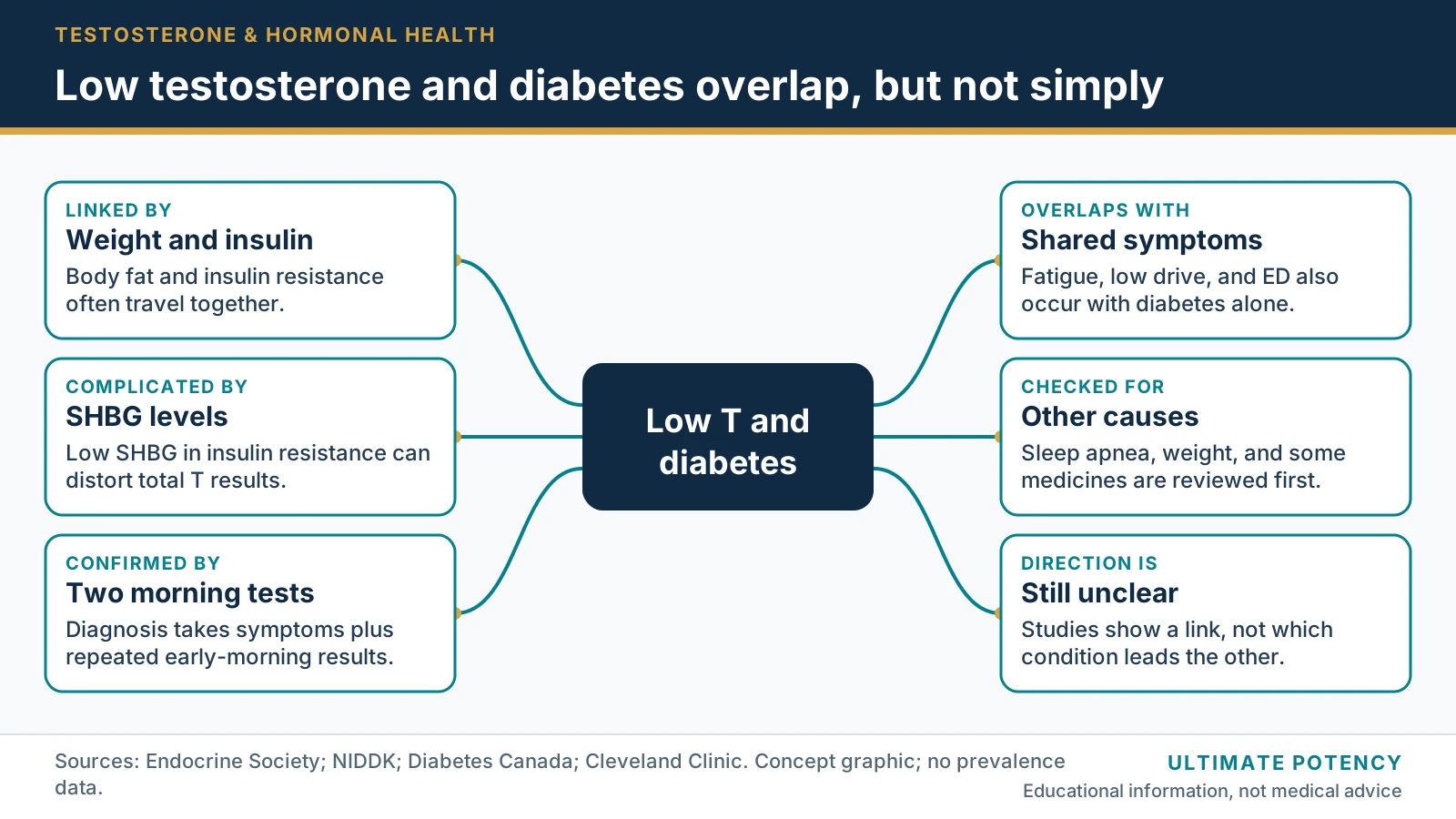
Text version: Low T and diabetes are linked by weight and insulin resistance. SHBG levels can complicate total testosterone results. Diagnosis is confirmed by two morning tests plus symptoms. Shared symptoms overlap with diabetes alone. Other causes such as sleep apnea, weight, and some medicines are checked first. The direction of the relationship is still unclear.
How Weight, Insulin Resistance, and SHBG Fit In
Several moving parts connect testosterone and blood sugar, and weight is a big one. Cleveland Clinic explains in its overview of low testosterone that most men with symptoms don’t have a testicular or pituitary disease. Instead, obesity and diabetes are common contributors, which affect the brain’s signaling to the testicles. Extra body fat and insulin resistance tend to travel together, and both can nudge testosterone downward. Then there’s sex hormone-binding globulin, or SHBG, a protein that carries testosterone in the blood. Diabetes Canada’s guideline chapter on sexual dysfunction and hypogonadism notes that low SHBG in insulin resistance can make total testosterone look lower than it really is. That’s why weight, insulin resistance, and lab interpretation can’t be separated neatly. For a closer look at the weight side, see our article on low testosterone and weight gain.
Why the Link Is Not Simple
Knowing that two things appear together is different from knowing why. This subsection looks at the direction of the relationship and at why the information you find online so often contradicts itself.
Cause, Consequence, or Both?
It’s a bit of a chicken-and-egg question. A large JAMA meta-analysis from 2006 pooled 43 studies and found that testosterone was lower on average in men who had type 2 diabetes. Across the prospective studies, which follow men over time, men with higher testosterone had a lower risk of developing diabetes later. That pattern suggests low testosterone may come before diabetes in some men. Yet diabetes, weight gain, and inactivity can also push testosterone down, so the relationship likely runs in both directions. The studies were observational, which means they show patterns, not proof. Hormone thresholds also varied from study to study. The honest summary is that the two conditions are tangled together, and one study can’t tell you which one started it in your case.
Why Online Answers Disagree
If you’ve read three articles on this topic and gotten three different messages, you’re not imagining it. Sources define “low” differently. Cleveland Clinic describes a total testosterone below 300 ng/dL as low, while one major diabetes prevention trial enrolled men whose levels were under 14 nmol/L, a higher cutoff. Some pages describe “age-related” or “late-onset” hypogonadism as a clear category, while the Endocrine Society’s July 2026 statement says those terms are hard to define and can blur treatable disease with normal aging. Commercial pages may also lean toward selling treatment. A good rule of thumb: be wary of any page that treats a single number, a single symptom, or a single supplement as the whole answer.
Symptoms That Overlap
Low testosterone and diabetes share many symptoms, which is exactly why guessing from symptoms goes wrong. This section looks at sexual changes first, then at mood, energy, and sleep, and finishes with a decision aid that turns what you notice into questions worth asking.
Sexual and Physical Changes
Sexual changes are often the first thing that sends men searching. Here we look at how desire and erections can change, and how diabetes alone can explain changes that people often blame on hormones.
Desire, Erections, and Energy
Low testosterone is classically linked to lower sex drive, fewer spontaneous erections, and less energy. Cleveland Clinic lists reduced sex drive, erectile difficulties, fatigue, low mood, reduced concentration, increased body fat, and decreased muscle strength among the possible signs. Diabetes enters the picture because NIDDK reports that men with diabetes are more than three times as likely to develop erectile dysfunction (ED) as men without diabetes. The key distinction is between desire and erections. A drop in desire points more toward hormones, mood, or relationship factors, while trouble getting or keeping an erection often reflects blood vessel and nerve health. Many men notice both. Because the two can overlap, a clinician will usually ask about each separately. Our article on low testosterone and ED explains how those pieces fit together.
When Diabetes Alone Can Explain a Change
Sometimes the diabetes itself is the whole story. NIDDK explains that high blood glucose can damage blood vessels and nerves, and that diabetic neuropathy, which is nerve damage, can affect the genitals and urinary tract. That can change erections, ejaculation, and sensation without any hormone problem. NIDDK also mentions that Peyronie’s disease, a curve in the penis caused by scar tissue, is more common in men with diabetes, and that retrograde ejaculation, where semen enters the bladder, can occur. If you use insulin, blood sugar swings matter too. NIDDK suggests checking your glucose before and after sex, since both high and low levels can cause problems. The practical lesson is that a sexual change in a man with diabetes deserves a look at diabetes management first, alongside any hormone question.
Mood, Sleep, and Daily Function
The less visible symptoms often cause the most day-to-day strain. This subsection covers tiredness, mood, and sleep, then explains why even a long symptom list can’t confirm a diagnosis.
Fatigue, Mood, and Sleep in Both Conditions
Feeling worn out is a perfect example of overlap. Blood sugar that runs too high or swings too low can drain energy, and so can low testosterone. Low mood and trouble concentrating show up on lists for both conditions too, and living with a chronic illness can weigh on anyone’s spirits. Sleep adds another layer. Obstructive sleep apnea, where breathing repeatedly pauses during sleep, is more likely with excess weight, and Mayo Clinic’s overview of male hypogonadism lists it among the conditions linked to low testosterone. Poor sleep can leave you tired and irritable no matter what your hormones are doing. If tiredness is your main complaint, our guides on low testosterone and sleep apnea and on low testosterone and fatigue explain how clinicians sort through the possibilities.
Why Symptom Lists Cannot Diagnose Low T
The Endocrine Society’s 2026 statement is blunt on this point: symptoms alone are not diagnostic of hypogonadism. Tiredness, low drive, and weight gain are common in men with or without low testosterone, and many men with type 2 diabetes who have low testosterone report no symptoms at all, according to Diabetes Canada. That cuts both ways. A long symptom list doesn’t prove low T, and no symptoms doesn’t prove normal levels. The table below turns common observations into questions rather than conclusions.
This decision aid links common observations to questions you can bring to an appointment, without pointing to a diagnosis.
| If you notice | A useful question | Why it matters |
|---|---|---|
| Lower sex drive that has lasted for months | Could hormones, mood, sleep, or medicines be involved? | Desire has several possible contributors, and a clinician can sort them. |
| Trouble getting or keeping erections | Is this related to my diabetes, my circulation, or my hormones? | Blood vessel and nerve health often matter as much as testosterone. |
| Constant tiredness | Should we check sleep, glucose patterns, and thyroid or hormone labs? | Fatigue is shared by many conditions, so testing should be targeted. |
| Weight gain around the middle | How might my weight and insulin resistance affect testosterone? | Weight can lower testosterone, and weight loss can sometimes raise it. |
| Glucose readings that are hard to control | Is my diabetes plan still the right fit? | NIDDK says sexual changes may signal that diabetes needs different management. |
Sources: Endocrine Society 2018 guideline and 2026 statement; NIDDK; Cleveland Clinic. An editorial tool, not a screening or diagnostic test.
Consider a hypothetical situation: a 52-year-old man with type 2 diabetes tells his clinician he’s tired, his sex drive has slipped, and his erections are less reliable. He assumes it’s low T. His clinician asks about sleep, snoring, medicines, mood, and recent blood sugar readings before ordering any hormone test. The visit isn’t a dead end. It’s the careful sorting that makes a later result meaningful. Staying open to several explanations keeps him from chasing the wrong fix.
Testing and Lab Results
A testosterone result is only useful when the test was done under the right conditions and read in context. This section covers how testing is usually done, why diabetes and weight can complicate the numbers, and how to approach a borderline or confusing report without jumping to conclusions about what it means.
How Testing Works
Good testing starts well before the blood draw. The next two subsections explain timing and repeat testing, and then the different forms of testosterone that a lab may report.
Morning Blood Draws and Repeat Testing
Testosterone is highest in the morning, so timing matters. MedlinePlus explains in its testosterone levels test page that blood is usually drawn between 7 and 10 a.m., and that you may need to fast for several hours beforehand. Diabetes Canada recommends a morning total testosterone drawn before 11 a.m. or within three hours of waking. One result is rarely enough. The Endocrine Society’s 2026 statement calls for at least two early-morning, fasting tests before a diagnosis, and Cleveland Clinic notes that illness can temporarily lower levels, so tell your clinician if you’ve been sick. If you take diabetes medicines, don’t skip or change them to prepare for the test. MedlinePlus advises you to tell your provider about every medicine you take and not to stop any unless your provider says so. If fasting is required and you use insulin or other glucose-lowering medicine, ask how to handle that safely. Our overview of how low testosterone is diagnosed walks through the full process.
Total, Free, and Binding Proteins
A lab report may list more than one kind of testosterone. Total testosterone counts everything in your blood, including testosterone attached to proteins. Free testosterone counts only the unattached portion, which is more available to your tissues, and MedlinePlus says it is measured less often. SHBG, the carrier protein, matters especially in diabetes, because it tends to run low in insulin resistance. Diabetes Canada notes that when symptoms are present but total testosterone sits in the low-normal range, free or bioavailable testosterone may help clarify the picture. Your clinician may also check luteinizing hormone (LH) and follicle-stimulating hormone (FSH), which are signals from the pituitary gland. The Endocrine Society’s guideline recommends them to tell whether the problem starts in the testicles or in the brain’s signaling. For more on these measurements, see free versus total testosterone.
Reading Your Report
Once the numbers are in, the next challenge is making sense of them. This subsection looks at units and thresholds, then at what to do when results are borderline, mixed, or don’t match how you feel.
Units, Thresholds, and Lab Differences
Labs report testosterone in either nanograms per deciliter (ng/dL) or nanomoles per liter (nmol/L), and mixing them up causes real confusion. As an approximate conversion, one nmol/L is about 28.8 ng/dL, so 14 nmol/L is roughly 400 ng/dL. The Endocrine Society’s 2026 statement describes a common clinical threshold near 300 ng/dL, and Cleveland Clinic uses the same figure, but no single cutoff fits everyone. The statement also warns that testing is often inaccurate because non-standardized assays can give different results from the same sample, and it recommends assays certified through the CDC’s HoST program. In practice, ask which test was used and compare results from the same lab when you can. The table below clears up the terms that most often cause trouble.
This table explains terms you may see on a report and the misunderstandings that tend to follow them.
| Term | Plain-language meaning | Common misunderstanding |
|---|---|---|
| Total testosterone | All testosterone in the blood, bound and unbound | That one low value confirms low T without repeat testing |
| Free testosterone | The unattached portion available to tissues | That it always replaces total testosterone as the better test |
| SHBG | A protein that carries testosterone | That a low SHBG value means a hormone deficiency by itself |
| Insulin resistance | Tissues respond less well to insulin | That it only matters for blood sugar, not for hormone readings |
| HbA1c | A blood test reflecting average glucose over recent months | That it measures testosterone or predicts it |
Sources: MedlinePlus; Endocrine Society 2018 guideline; Diabetes Canada. Plain-language summaries, not reference ranges.
Borderline or Mixed Results
Many reports land in a gray zone. A value may sit just under or just over a threshold, or total and free testosterone may tell different stories. That’s normal, and it’s why repeat testing exists. Cleveland Clinic mentions that a provider may also order LH and prolactin tests, because they help show whether the pituitary gland is involved. Prolactin is a pituitary hormone, and unusually high levels can point to a pituitary issue. If your result is borderline and your symptoms are mild, a reasonable path may be to address weight, sleep, and diabetes control first and then retest. If symptoms are significant, your clinician may investigate further sooner. Either way, the goal is to avoid treating a number. As MedlinePlus puts it, a testosterone test alone can’t diagnose a condition.
Other Causes Clinicians Consider
Before attributing symptoms to a hormone problem, clinicians look for contributors that can be addressed directly. This section covers related health conditions, then medicines and daily habits. The Endocrine Society’s 2026 statement specifically says reversible contributors should be ruled out first.
Related Health Conditions
Several medical conditions can lower testosterone or mimic its symptoms. We’ll look at weight and sleep first, then at organ conditions and pituitary-related causes.
Weight, Body Fat, and Sleep Apnea
Weight and sleep are probably the most common companions of low testosterone in men with diabetes. Mayo Clinic’s hypogonadism overview lists obesity and obstructive sleep apnea among its causes and risk factors, and Cleveland Clinic names obesity and diabetes as common contributors. Excess weight and sleep apnea also make blood sugar harder to manage, so the three can feed one another. That is encouraging in one sense, since improving one part can help the others. The Endocrine Society’s 2026 statement says that when hypogonadism is linked to overweight or obesity with no other cause identified, weight loss is typically the first-line approach. If your clinician suspects sleep apnea, a sleep study can confirm it. For more detail, see our articles on low testosterone and weight gain and low testosterone and sleep apnea.
Kidney, Liver, and Pituitary Concerns
Not every low result traces back to weight. MedlinePlus lists chronic liver or kidney disease, pituitary disorders, benign tumors, testicular problems, and alcohol use disorder among conditions linked to low testosterone in men. Because diabetes can affect the kidneys over time, clinicians may review kidney function as part of your broader care. A pituitary cause is less common but important to catch, which is partly why LH, FSH, and sometimes prolactin are measured. Cleveland Clinic notes that most men with symptoms don’t have a pituitary or testicular disease, but the possibility is checked when results or the story don’t fit. Testicular injury or infection can matter too. None of this means something serious is likely. It means a thorough evaluation looks past the obvious and treats the cause, not just the number.
Medicines and Daily Habits
What you take and how you live can change testosterone. This subsection covers the medicines most often mentioned, and then the everyday habits that sit within your control.
Medicines Worth Reviewing
Several medicine types come up repeatedly. The Endocrine Society’s 2026 statement names corticosteroids and opioids as reversible contributors worth ruling out, Mayo Clinic lists opiates among the medicines behind secondary hypogonadism, and Cleveland Clinic adds anabolic steroids. Bring a list of everything you take, including prescriptions, over-the-counter products, and supplements, so your clinician can look for a pattern. The sources I reviewed don’t establish that standard diabetes medicines lower testosterone, so don’t assume one is the culprit. Never stop or change a prescribed medicine on your own because of a hormone question. Doing so could affect your blood sugar, blood pressure, or heart health far more than your testosterone. Our article on medications that lower testosterone covers the topic in more depth.
Alcohol, Activity, Stress, and Sleep
Daily habits can’t fix every case, but they’re a reasonable place to start. Cleveland Clinic suggests maintaining a healthy weight, eating well, staying active, sleeping about seven hours, treating sleep apnea, and limiting substance use as ways to reduce risk, and it names nutritious eating and regular physical activity as first-line steps. MedlinePlus lists alcohol use disorder among the conditions linked to low testosterone. NIDDK adds that men with diabetes can protect sexual health by managing blood pressure, cholesterol, weight, inactivity, smoking, and alcohol. None of this is a promise that habits will normalize a hormone level. It’s a set of changes that tend to help diabetes, sleep, mood, and testosterone together, which makes them worth taking seriously. A clinician or diabetes educator can help you choose changes that fit your life.
Comparing Relevant Factors
Not all evidence is equal, and this topic shows why. Some findings come from observing groups of men over time, while others come from randomized trials that test a treatment directly. This section sorts out what each type can and can’t tell you, then compares the care pathways that men and clinicians actually weigh.
Evidence and Limitations
Reading the research well means knowing what each study design can support. This subsection starts with the difference between association and cause, then applies it to the main trials on testosterone and blood sugar.
Association Versus Cause
An association means two things tend to appear together. A cause means one produces the other. Observational studies, like the 2006 JAMA meta-analysis, can reveal associations but can’t prove cause, because other factors such as weight, age, and activity may drive both. Randomized trials come closer to answering cause, because chance decides who gets the treatment and who gets a placebo. This distinction explains much of the mixed messaging. Seeing lower testosterone in men with diabetes doesn’t mean raising testosterone will lower blood sugar. It might, or the low testosterone might itself be a marker of weight and insulin resistance that treatment never touches. The same logic applies in the other direction. Whether diabetes lowers testosterone, or low testosterone raises diabetes risk, observational data alone can’t fully separate the two. That’s why trials of treatment matter so much here, and why their results deserve a careful look.
How the Evidence Applies
Two large randomized trials point in different directions, and both matter. In the T4DM trial, published in The Lancet Diabetes & Endocrinology in 2021, 1,007 Australian men aged 50 to 74 with impaired glucose tolerance or newly diagnosed type 2 diabetes received testosterone injections or placebo alongside a lifestyle program for two years. Fewer men on testosterone had diabetes at two years. But the later TRAVERSE prediabetes substudy of 1,175 men with hypogonadism found that progression to diabetes was similar with testosterone gel or placebo, with no difference in fasting glucose or HbA1c. Its authors concluded testosterone shouldn’t be used to prevent or treat diabetes, and a second summary reports the same pattern. The populations, doses, and designs differed, so the results don’t simply cancel out. The table below puts them side by side.
This evidence matrix lists the main findings discussed in this article, the kind of evidence behind each, and the limits that apply.
| Question | Evidence type | What was reported | Main limitation |
|---|---|---|---|
| Do men with type 2 diabetes have lower testosterone? | Meta-analysis of 43 observational studies | Lower average testosterone in men with type 2 diabetes; higher testosterone linked to lower later risk (RR 0.58) | Observational; cannot prove cause; thresholds varied |
| Does testosterone plus lifestyle lower diabetes diagnoses? | Randomized trial, 1,007 men, 2 years (T4DM) | Diabetes at 2 years: 21% on placebo vs 12% on testosterone (RR 0.59) | Men aged 50-74, higher entry cutoff; hematocrit above 54% in 22% on testosterone vs 1% on placebo |
| Does testosterone slow prediabetes progression? | Randomized substudy, 1,175 men (TRAVERSE) | Progression similar to placebo; no glucose or HbA1c difference | Substudy; critics noted HbA1c use and incomplete lifestyle data |
| Should testosterone be used to improve glucose control? | Endocrine Society 2018 guideline | Advises against it in men with type 2 diabetes and low testosterone | Guideline is from 2018 |
| Did the FDA find a heart attack or stroke signal? | FDA labeling review, 2025 | TRAVERSE results added; boxed-warning heart-risk language removed; blood pressure warnings added | Does not make therapy risk-free |
Sources: JAMA 2006 meta-analysis; T4DM (Lancet Diabetes Endocrinol 2021); TRAVERSE substudy summaries; Endocrine Society 2018; FDA 2025. Figures are as reported by the sources.
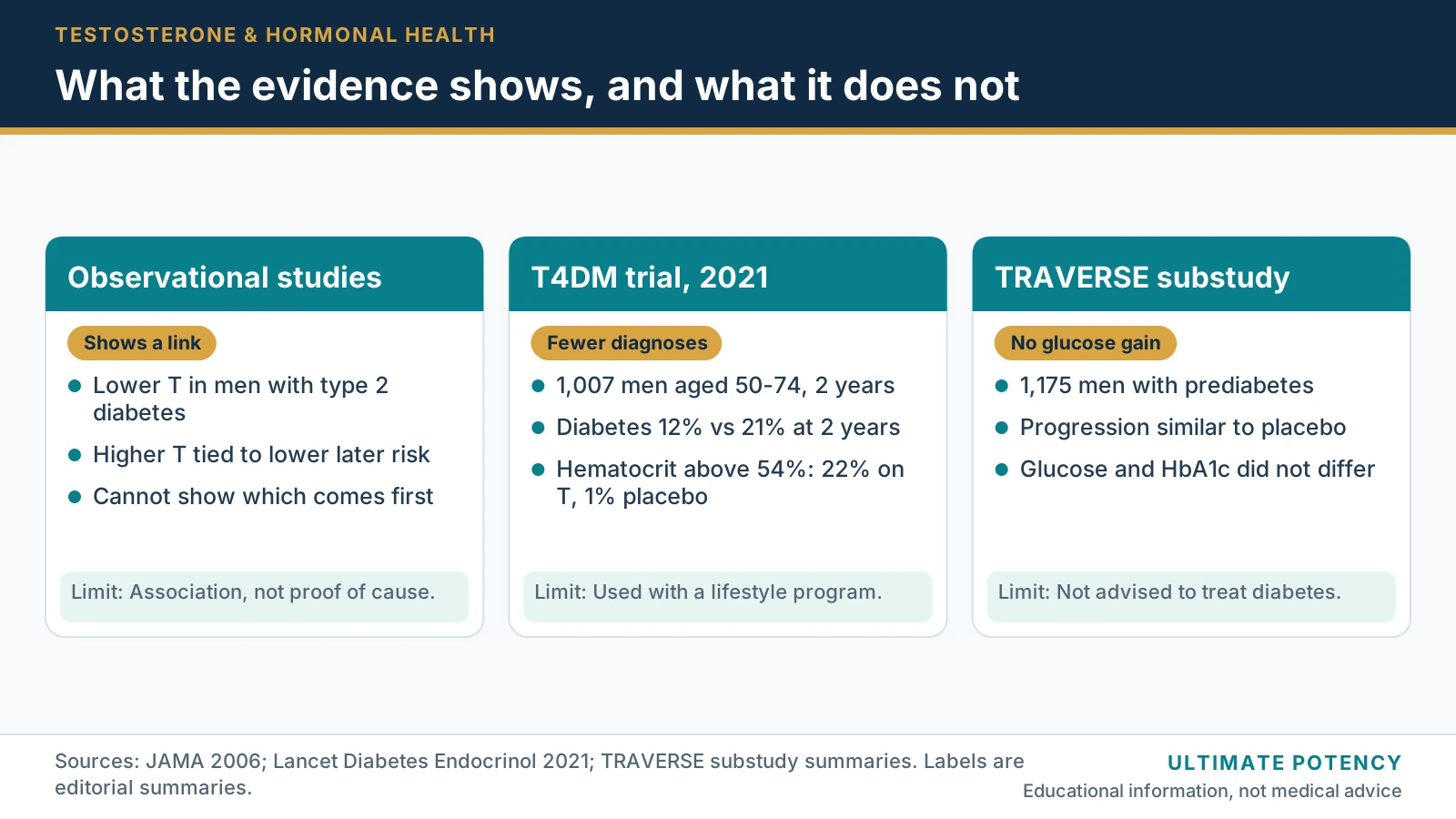
Text version: Observational studies show a link: lower testosterone in men with type 2 diabetes, but not which comes first. The T4DM trial of 1,007 men found diabetes in 12 percent on testosterone versus 21 percent on placebo at two years, with a lifestyle program and more high hematocrit. The TRAVERSE substudy of 1,175 men with prediabetes found similar progression and no glucose difference.
Comparing Care Pathways
Men with low testosterone and diabetes usually face a choice about where to put effort first. This subsection compares the main pathways, then looks at how to weigh benefits, risks, and personal fit.
Diabetes Care, Weight, and Hormone Treatment
Think of three overlapping pathways. The first is diabetes management: blood sugar, blood pressure, cholesterol, and medicines. NIDDK notes that good diabetes management may help prevent and treat ED caused by nerve and circulation problems, and that a doctor may adjust your diabetes plan as part of care. The second is weight, sleep, and activity. Diabetes Canada states that significant weight loss can restore normal testosterone levels in some men without hormone replacement. The third is testosterone therapy itself, considered only when symptoms and consistently low results are both present. These aren’t competing choices. Most clinicians would look at the first two before the third, and the pathways often run at the same time. Which one deserves the most attention depends on your symptoms, your labs, and what else is going on.
Weighing Benefits, Risks, and Fit
Each pathway has a different balance of benefits and trade-offs. Lifestyle changes carry few risks but take time and effort, and results vary. Diabetes adjustments may improve sexual symptoms and overall health, with no hormone-related downsides. Testosterone therapy may ease symptoms in men with a confirmed deficiency, but it comes with monitoring, possible effects on fertility, and risks such as higher blood pressure. Consider a hypothetical situation: a 47-year-old man with prediabetes has two low morning results and persistent low drive. He and his clinician agree to start with sleep apnea testing, weight and activity changes, and a repeat hormone check in a few months. If symptoms and low results continue, they plan to discuss therapy then. That’s one reasonable sequence, not a rule. The right order depends on personal goals, including whether he wants children.
Treatment Conversations and Safety
Treatment is where the stakes for safety rise, so precision matters. This section explains how testosterone therapy is generally approached, what to ask about fertility and monitoring, and what men with diabetes should know about ED medicines, including the urgent symptoms that shouldn’t wait.
Testosterone Therapy Basics
Testosterone therapy is a prescription treatment with a defined purpose. The next two subsections explain when clinicians consider it and the practical issues that come with starting it.
When Clinicians Consider Testosterone Therapy
The FDA’s 2025 labeling announcement states that testosterone products are approved solely for men who lack or have low testosterone in conjunction with an associated medical condition, and it has kept limitation-of-use language for age-related hypogonadism. In practice, that means therapy is considered when a man has both symptoms and consistently low, accurately measured results, and when reversible contributors have been addressed. Cleveland Clinic describes nutritious eating and regular activity as first-line, with other treatment considered if those don’t help after six to twelve months or symptoms are severe. NIDDK says therapy may improve sexual problems alongside good diabetes management but may not be safe for all men. Readers who want the full risk picture can see our article on testosterone therapy benefits and risks. Therapy requires a prescription and a clinician who knows your history, and it is never something to start on your own.
Fertility, Monitoring, and Label Information
Three practical issues deserve attention before therapy starts. First, fertility. The Endocrine Society’s 2018 guideline advises against testosterone therapy in men planning fertility in the near term, and Cleveland Clinic notes that clomiphene citrate is an option for men who want to have children. Our guide to TRT and fertility covers this in depth. Second, monitoring. The Endocrine Society’s 2026 statement says risk assessment before starting and monitoring during treatment are essential, and describes long-term safety, including prostate cancer risk, as not established. Cleveland Clinic suggests follow-up visits once or twice a year. Third, label changes. The FDA’s 2025 update added TRAVERSE results to labels, removed boxed-warning language about increased cardiovascular risk, and adds blood pressure warnings across the class. TRAVERSE also showed more pulmonary embolism and fractures, according to the Society’s description. A changed warning doesn’t mean every risk has disappeared.
ED Medicines and Diabetes
Because erection changes are so common with diabetes, many men also ask about ED medicines. This subsection covers how they fit into care and the safety rules that apply with or without testosterone.
PDE5 Inhibitors in Men With Diabetes
PDE5 inhibitors are the pill-based ED medicines, and the NIDDK treatment page says they may help you get and keep an erection. Diabetes Canada lists them as first-line treatment for ED in men with diabetes, either on demand or daily. They’re prescription medicines, and NIDDK notes that testosterone may be prescribed alongside them when low testosterone is present. MedlinePlus lists diabetes among the conditions to mention to your doctor before taking sildenafil, one of these medicines, so your health history matters. These medicines don’t treat the underlying hormone or blood sugar problem. They help erections work during sexual activity. If ED is a concern, our article on what kind of doctor treats ED explains who can help, and a clinician can decide which approach fits your health.
Urgent Symptoms and Interaction Warnings
Safety rules for ED medicines are specific. The MedlinePlus sildenafil page tells people to report nitrate medicines used for chest pain, such as isosorbide dinitrate, isosorbide mononitrate, and nitroglycerin, and also says street drugs containing nitrates, called poppers, are a concern. Our article on ED medicine and nitrates covers this interaction in detail. Do not combine different ED medicines on your own. MedlinePlus says to use only one sildenafil product at a time and to avoid taking sildenafil, tadalafil, or vardenafil after vision or hearing loss until you speak with your doctor. NIDDK also advises talking with a clinician before using dietary supplements and not ordering ED medicine online before speaking with a clinician. “Natural” products are not automatically safe.
Common Questions
Readers tend to arrive with similar questions, and the answers are often more nuanced than a search snippet suggests. This section groups them into two sets, one about testing and cause and one about treatment and lifestyle, and answers each in plain language with the limits of the evidence in view.
Testing and Cause Questions
These questions come up right after a diabetes diagnosis or a worrying lab result. They deal with who should be tested and whether one condition drives the other.
Should Every Man With Diabetes Get Tested?
Guidelines don’t fully agree, so the answer depends on who you ask. Diabetes Canada recommends screening for symptomatic hypogonadism in men with type 2 diabetes, and says biochemical testing is for men who have symptoms, not for men without any. The Endocrine Society’s 2018 guideline recommends against routine screening of men in the general population, and its 2026 statement says there’s insufficient evidence to recommend screening men without symptoms. Put together, the common thread is that testing makes sense when symptoms are present, and routine testing for everyone isn’t supported. Keep in mind that the Canadian guideline is not a U.S. document, and U.S. practice varies. If you have symptoms such as low sex drive, erection changes, or unexplained fatigue, ask whether testing is appropriate. If you feel fine, there’s generally no need to push for it.
Can Low Testosterone Cause Diabetes?
Nobody can say for sure. Observational research, including the 2006 JAMA meta-analysis, tied higher testosterone to a lower chance of type 2 diabetes appearing later, which hints that low testosterone could play a role. But weight, inactivity, and insulin resistance can lower testosterone and raise diabetes risk at the same time, so low testosterone might be a marker rather than a trigger. The randomized trials offer only partial clarity. T4DM suggested that testosterone, added to a lifestyle program, reduced diabetes diagnoses in men aged 50 to 74 with specific criteria, while the TRAVERSE substudy found no such benefit in men with hypogonadism and prediabetes. Taken together, the best-supported statement is that the relationship is real, probably runs both ways, and has not been shown to mean that low testosterone alone causes diabetes.
Treatment and Lifestyle Questions
The second group of questions focuses on what to do. They cover whether hormone treatment helps blood sugar and whether lifestyle changes can make treatment unnecessary.
Will Testosterone Therapy Improve My Blood Sugar?
Probably not enough to count on, and it shouldn’t be used for that purpose. The Endocrine Society’s 2018 guideline advises against using testosterone to improve glycemic control in men with type 2 diabetes and low testosterone. Diabetes Canada describes the evidence on A1C as mixed. In the TRAVERSE substudy, fasting glucose and HbA1c didn’t differ between testosterone and placebo. T4DM did find lower fasting and 2-hour glucose measures with testosterone plus a lifestyle program, but a follow-up discussion of that trial noted that HbA1c didn’t change and that benefits were seen alongside lifestyle support. If a clinician does prescribe testosterone for symptoms of confirmed hypogonadism, your diabetes plan, including medicines, glucose checks, and diet, still matters just as much. Therapy is a symptom treatment, not a stand-in for diabetes care.
Can Losing Weight Raise My Testosterone Without Treatment?
For some men, yes. Diabetes Canada’s guideline notes that substantial weight loss brought testosterone back to normal for some men who never needed replacement, and the Endocrine Society’s 2026 statement calls weight loss the usual first step when a hormone problem tracks with excess weight and nothing else explains it. That doesn’t mean everyone will see their numbers rise, and the sources I reviewed don’t give a reliable amount of weight loss or a time frame that predicts success. Weight change also helps blood sugar, sleep, and blood pressure, so even if testosterone stays put, you may gain in other ways. A sensible approach is to work on weight with your care team, recheck testosterone later if symptoms persist, and avoid crash diets or supplements that promise hormone boosts. Cleveland Clinic advises talking with a provider rather than using over-the-counter products for bothersome symptoms.
Your Next Steps
A clear plan helps you get more from a short appointment. This section covers how to prepare, what to ask, and what to expect afterward. It also explains which changes should prompt you to seek care sooner instead of waiting for a scheduled visit.
Preparing for Care
Preparation takes the pressure off a short visit. The next two subsections cover what to gather and what to ask.
Gathering Your Notes and Medication List
Start with a simple record. Write down what you’ve noticed, when it began, how often it happens, and whether it tracks with sleep, stress, or blood sugar swings. Bring your recent glucose readings, HbA1c results if you have them, and any past testosterone results with the lab’s name and units. Bring a complete list of medicines, including prescriptions, over-the-counter products, and supplements, since MedlinePlus stresses telling your provider about all of them. Note any sleep problems, such as loud snoring or daytime sleepiness, and your plans about having children. If you can, schedule the blood draw for the morning, as your clinician advises. The table below turns that gathering into a checklist you can fill out in advance.
This preparation table shows what to note, why each item helps, and what to bring so the appointment goes further.
| What to note | Why it helps | What to bring |
|---|---|---|
| Sexual, energy, and mood changes | Timing and pattern help separate possible causes | Short notes with dates and examples |
| Blood sugar patterns | Swings can affect energy and sexual function | Meter readings, sensor data, or recent HbA1c |
| Medicines and supplements | Some can affect hormones or interact with treatments | A full list with names and amounts |
| Sleep and snoring | Sleep apnea can lower testosterone and worsen glucose control | Notes from a partner, or past sleep study results |
| Fertility plans | Therapy can affect fertility, so goals shape options | Your current plans, or “not sure” |
| Past lab results | Trends and units give context | Prior testosterone and glucose reports |
Sources: MedlinePlus; Cleveland Clinic; NIDDK. An editorial preparation aid, not a diagnostic tool.
Questions About Low Testosterone and Diabetes
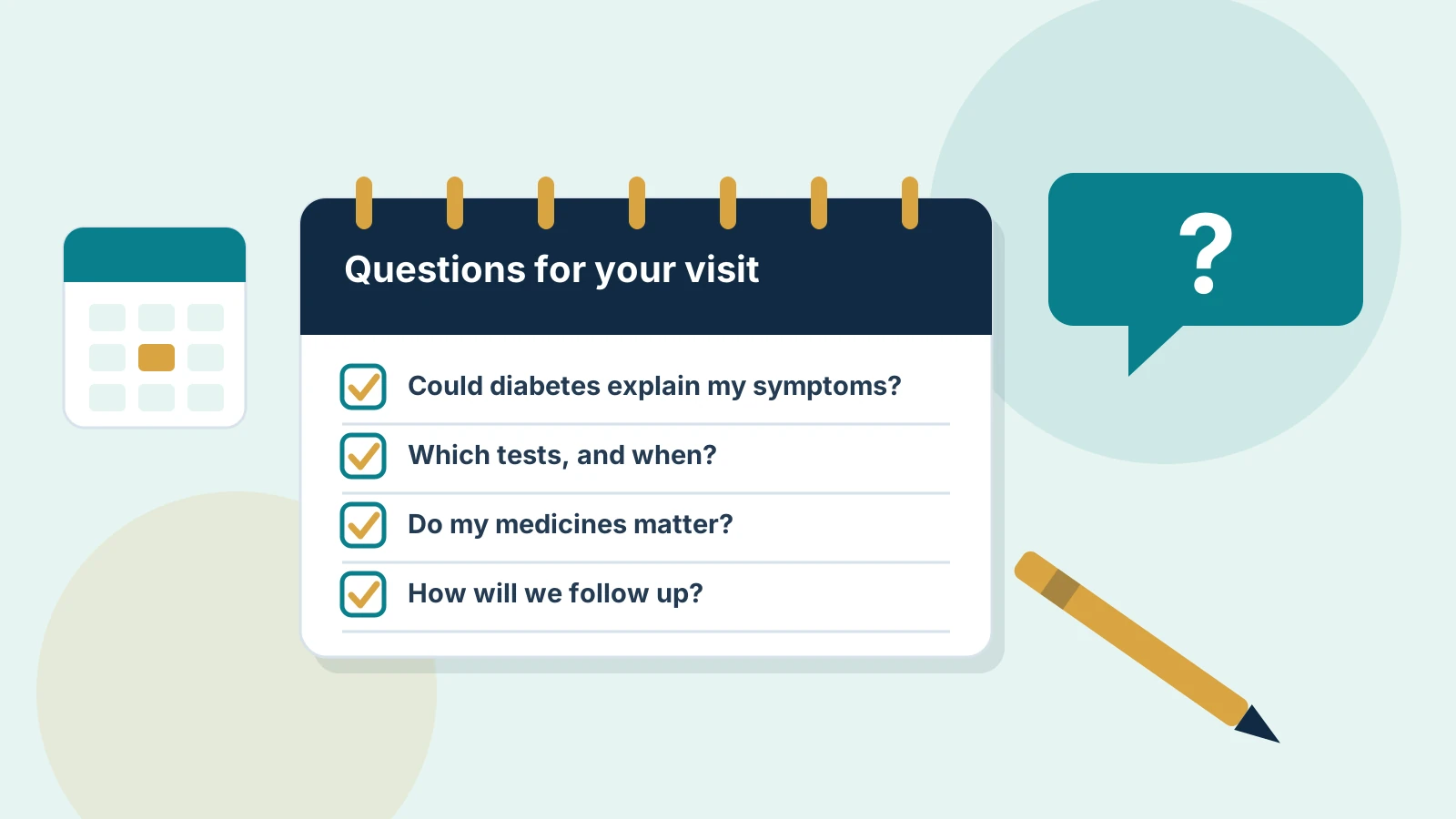
A good visit is a conversation, so come with questions. You might ask whether your symptoms fit low testosterone or could be explained by diabetes, sleep, or medicines. You could ask which tests make sense, when they should be drawn, and whether they should be repeated. It’s fair to ask how your weight, sleep, and blood sugar might be affecting the picture, and what you can do about each. If treatment comes up, ask about benefits, risks, monitoring, and fertility, and what would happen to your diabetes plan. You can also ask who should follow up and how soon. Our article on how low testosterone is diagnosed can help you understand the process before you go. Writing your questions down means you won’t forget them when the room gets quiet.
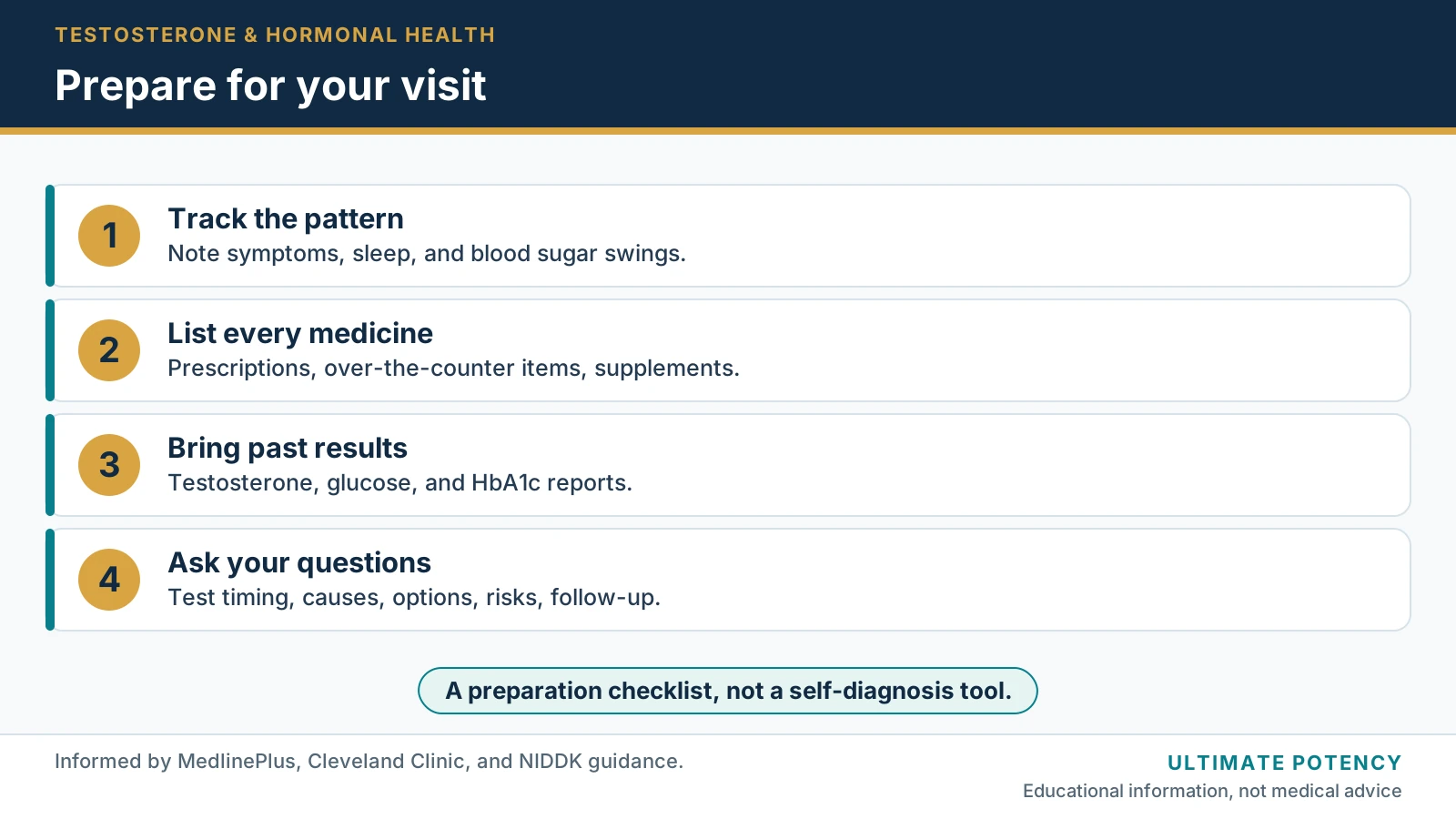
Text version: Step 1: track the pattern of symptoms, sleep, and blood sugar. Step 2: list every medicine and supplement. Step 3: bring past testosterone, glucose, and HbA1c results. Step 4: ask about test timing, causes, options, risks, fertility goals, and follow-up.
After the Visit
The visit is just the start. These two subsections cover how to understand the plan you leave with and when something warrants a quicker call.
Understanding the Plan and Follow-Up
Before you leave, make sure you can say the plan back in your own words. Which tests are next, and when? Are any changes planned for your diabetes medicines, and who will manage them? If you’re prescribed anything, ask what to watch for and when to check in. Cleveland Clinic notes that men on hormone therapy typically need follow-up once or twice a year, while the Endocrine Society’s 2026 statement emphasizes monitoring during treatment. If your results are borderline, a repeat test is a normal next step, not a sign that something was missed. Keep your lab reports, since trends over time are often more informative than a single value. If cost or access is a concern, tell your clinician, because that can shape which options are realistic. Having the plan on paper also helps if a partner wants to be involved.
Knowing When to Seek Care Sooner
Some situations shouldn’t wait. NIDDK advises seeing a health care professional for sexual or bladder problems, since they may signal that your diabetes needs different management, and to see a doctor right away for frequent, urgent, or painful urination, because bladder infections can spread to the kidneys. If you take an ED medicine, an erection lasting longer than four hours, sudden vision loss, or sudden hearing loss needs urgent care. Chest pain, fainting, and worsening shortness of breath need emergency attention. Contact your care team promptly if blood sugar readings become hard to control, if mood changes feel heavy or persistent, or if new symptoms appear after starting any treatment. When in doubt, call. You’re not being dramatic. Early attention often makes problems easier to fix.
Sources
- Testosterone Therapy in Men With Hypogonadism: An Endocrine Society Clinical Practice Guideline. Endocrine Society. 2018 guideline. Checked 2026-10-16.
- Statement on Testosterone Replacement Therapy. Endocrine Society. July 16, 2026. Checked 2026-10-16.
- FDA Issues Class-Wide Labeling Changes for Testosterone Products. U.S. Food and Drug Administration. February 28, 2025. Checked 2026-10-16.
- Diabetes and Men's Sexual and Urologic Problems. NIDDK. Last reviewed June 2018. Checked 2026-10-16.
- Sexual Dysfunction and Hypogonadism in Men With Diabetes (Chapter 33). Diabetes Canada Clinical Practice Guidelines. Edition year not stated on page. Checked 2026-10-16.
- Testosterone Levels Test. MedlinePlus (NIH). Updated June 5, 2025. Checked 2026-10-16.
- Low Testosterone (Male Hypogonadism). Cleveland Clinic. Updated February 23, 2026. Checked 2026-10-16.
- Male Hypogonadism: Symptoms and Causes. Mayo Clinic. Published September 20, 2024. Checked 2026-10-16.
- Testosterone treatment to prevent or revert type 2 diabetes in men enrolled in a lifestyle programme (T4DM). The Lancet Diabetes & Endocrinology (record via University of Adelaide repository). 2021;9(1):32-45. Checked 2026-10-16.
- Testosterone and type 2 diabetes prevention: translational lessons from the T4DM study. Journal of Endocrinology (record via Austin Health repository). 2023;258(3). Checked 2026-10-16.
- Testosterone therapy does not slow progression to diabetes, increase odds for remission. Healio (summary of TRAVERSE prediabetes substudy, JAMA Internal Medicine). 2024. Checked 2026-10-16.
- Effect of testosterone on progression from prediabetes to diabetes in men with hypogonadism: a substudy of the TRAVERSE randomized clinical trial. Specialist Pharmacy Service (NHS) summary. Summary page; year not stated. Checked 2026-10-16.
- Sex Differences of Endogenous Sex Hormones and Risk of Type 2 Diabetes: A Systematic Review and Meta-analysis. JAMA. 2006. Checked 2026-10-16.
- Treatment for Erectile Dysfunction. NIDDK. Last reviewed October 2024. Checked 2026-10-16.
- Sildenafil. MedlinePlus (NIH). Last revised August 15, 2023. Checked 2026-10-16.
Ultimate Potency is an educational publication. It does not diagnose, prescribe, or provide medical care. This article does not replace advice from a licensed healthcare professional who knows your history.