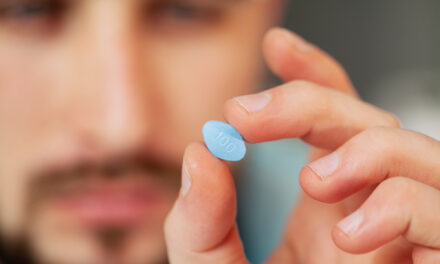
The Cialis (tadalafil) label says alcohol and tadalafil are both mild vasodilators, and that substantial drinking (e.g., 5 units or greater) can raise the chance of dizziness, headache, a faster heart rate, and a drop in standing blood pressure. The label sets no safe number and no waiting time, so your prescriber has to personalize the advice.
If you’ve searched “tadalafil and alcohol,” you probably want a plain answer to a plain question: can I have a drink if I take this? That’s a reasonable thing to ask. Drinks show up at dinners, weddings, dates, and ordinary Fridays, and ED medicine is often taken with exactly those evenings in mind. The honest answer is a little more detailed than yes or no. The FDA-approved label does not ban alcohol, but it does warn about larger amounts, and it explains why.
Tadalafil is a PDE5 inhibitor (phosphodiesterase type 5 inhibitor), a medicine that helps blood vessels in the penis relax so blood can flow in when you’re aroused. Alcohol also relaxes blood vessels, which is the heart of the issue. This article walks through what the current Cialis labeling on DailyMed actually says about alcohol, how the dizziness and standing-up effects work, what the clinical pharmacology studies found, and which situations call for extra care. It also explains what the label leaves out, so you don’t fill the gaps with myths.
We’ll stay on the alcohol question. For the general profile of the drug, read tadalafil for erectile dysfunction; for the sibling medicine, see sildenafil and alcohol; for how meals fit in, see tadalafil and food; and for the drug-versus-drug picture, see sildenafil vs. tadalafil. Nothing here is a prescription or a personal drinking limit. It’s a map you can bring to the person who knows your health history and medicine list.
- The Cialis label says alcohol and tadalafil are both mild vasodilators and that substantial alcohol intake (e.g., 5 units or greater) can increase orthostatic signs and symptoms such as dizziness, headache, a faster heart rate, and lower standing blood pressure.
- The label gives no safe number of drinks and no waiting time, and it does not define “units,” so treat “5” as an example, not a permission slip below it.
- In the labeled studies, tadalafil did not change alcohol levels and alcohol did not change tadalafil levels; the concern is the combined effect on blood pressure.
- Other blood pressure-lowering medicines, heart conditions, and liver disease can change the conversation, so share your full medicine list and drinking pattern with your prescriber.
- Sudden vision loss, sudden hearing loss, an erection lasting more than 4 hours, chest pain, or fainting need urgent medical care.
Tadalafil and Alcohol: What the Label Says
Before looking at studies or personal factors, it helps to read the label’s own words on alcohol. They are short, specific, and easy to misread in either direction. This section covers what the warning says, what it was built on, and what it deliberately leaves out.
The warning in plain language
The alcohol language sits in the warnings and precautions section and again in the drug interactions section. In both places, the logic is the same: two things that gently widen blood vessels can add together.
Two mild vasodilators, one shared effect
The label states that “both alcohol and CIALIS, a PDE5 inhibitor, act as mild vasodilators,” and that when mild vasodilators are taken together, the blood-pressure-lowering effects of each “may be increased.” A vasodilator is anything that widens blood vessels. Wider vessels mean lower resistance, and lower resistance can mean lower blood pressure, especially when you stand up.
Tadalafil’s vasodilating effect is described in the label as mild and systemic, meaning it reaches vessels throughout the body, not just in the penis. That’s why the label also lists transient decreases in blood pressure as a general property of the drug. Alcohol adds its own relaxing effect on vessels. Neither is dramatic alone for most people, but the combination is the reason the warning exists. The label is not claiming alcohol makes tadalafil stronger in the bloodstream; as covered below, it says the opposite.
What “5 units or greater” means
The label tells physicians to inform patients that “substantial consumption of alcohol (e.g., 5 units or greater) in combination with CIALIS can increase the potential for orthostatic signs and symptoms.” It lists increase in heart rate, decrease in standing blood pressure, dizziness, and headache as examples. Orthostatic means related to standing upright; orthostatic signs are what happens when your body struggles to keep blood pressure steady as you move from sitting or lying to standing.
Two details matter. First, “e.g.” means “for example.” The five-unit figure illustrates what the label calls substantial, and it isn’t presented as a cutoff below which nothing can happen. Second, the warning is about a larger amount in combination with the medicine, not about every sip. MedlinePlus, the NIH patient medicine page, puts it in everyday terms: a large amount of alcohol (more than five glasses of wine or five shots of whiskey) makes dizziness, headache, fast heartbeat, and low blood pressure more likely.
What the label leaves out
Equally important is what the label does not claim. A lot of online advice fills these gaps with confident numbers that no source supports.
No safe number and no waiting time
The label does not say how many drinks are safe, does not say how long to wait between a drink and a tablet, and does not say to avoid alcohol completely. MedlinePlus advises you to talk to your doctor about “the safe use of alcoholic beverages” during treatment, which is a pointer to individual advice, not a rule. A missing number is not the same as a green light, and it’s not a red light either; it means the answer depends on you.
The table below lines up the main alcohol-related statements and where the wording comes from, so you can see which parts are firm and which are open.
| Topic | What the source says | What it does not say |
|---|---|---|
| Mechanism | Alcohol and tadalafil are both mild vasodilators; blood-pressure-lowering effects “may be increased.” | How large the combined effect is for any one person. |
| Amount | “Substantial consumption of alcohol (e.g., 5 units or greater)” can increase orthostatic signs and symptoms. | A safe amount below five, or a definition of a unit. |
| Symptoms | Faster heart rate, lower standing blood pressure, dizziness, headache. | How often each occurs with real-world drinking. |
| Blood levels | Tadalafil did not change alcohol levels, and alcohol did not change tadalafil levels. | Anything about drunkenness or judgment. |
| Timing | No waiting period is given. | How long after a dose a drink is lower risk. |
| Patient wording | MedlinePlus: more than five glasses of wine or five shots of whiskey makes dizziness, headache, fast heartbeat, and low blood pressure more likely; talk to your doctor about safe use. | A personal limit. |
Source note: Cialis (tadalafil) labeling on DailyMed, Highlights revised 3/2026 (Sections 5.9, 7.1, 12.2); MedlinePlus tadalafil page, revised 04/15/2023. Summary by Ultimate Potency editors. The label does not define “units,” and it does not state a safe number of drinks or a waiting time.
Units, drinks, and the labels’ different wording
The label says “units,” while patient pages talk about glasses of wine and shots. These aren’t the same measuring stick. In the United States, the National Institute on Alcohol Abuse and Alcoholism (NIAAA) defines a standard drink as 0.6 fluid ounces, or 14 grams, of pure alcohol. Examples include 12 ounces of regular beer at about 5% alcohol by volume, 5 ounces of table wine at about 12%, and 1.5 ounces of distilled spirits at about 40%.
Real servings often exceed those amounts. NIAAA notes that a 12-ounce beer at 10% alcohol by volume counts as two standard drinks, and that cocktails vary by recipe. Whether the label’s “units” equal U.S. standard drinks isn’t stated, so treat the NIAAA definition as a practical yardstick for counting, not as proof of what the label meant. If you’re not sure how much you drink in a typical evening, that uncertainty is itself useful information to bring to your prescriber.
How the Interaction Works
The interaction is mostly about blood pressure and posture, with timing as a secondary question. Understanding the mechanism makes the symptoms less mysterious and helps you notice them early.
Blood vessels, posture, and dizziness
Standing up is an easy thing to take for granted. Your body adjusts in a second or two by tightening vessels and nudging your heart rate. When vessels are already relaxed, that reflex has less room to work.
Why orthostatic signs happen
When you move from sitting to standing, gravity pulls blood toward your legs, and your nervous system quickly squeezes vessels and speeds the heart slightly to keep blood flowing to your brain. Tadalafil and alcohol both loosen vessel walls, so the squeeze has less to work with. Blood pressure on standing can dip, the heart may beat faster to compensate, and you can feel lightheaded or dizzy for a moment.
This is the same reason the label cautions about other blood pressure-lowering medicines, such as alpha blockers. The mechanisms overlap even though the drugs differ. Alcohol adds another variable that is easy to underestimate: the drinks you have in an evening are rarely measured, and the effect builds as the evening goes on. The effect depends on the total picture, which includes how much you drank, how fast, whether you ate, whether you’re dehydrated, and what else you take.
Dizziness, heart rate, and headache as signals
The label’s list of orthostatic signs (a faster heart rate, a drop in standing blood pressure, dizziness, and headache) reads like a checklist of things you might notice. A pounding or racing heartbeat when you stand, a swimmy feeling, or a headache that builds as you drink are the kinds of signals the label has in mind. A blood pressure cuff would show the drop, but most people only notice how they feel.
These signals aren’t unique to the combination. Headache is a common effect of tadalafil on its own, and the label’s ED trial tables show it more often in tadalafil groups than placebo groups. Alcohol can cause headaches and dizziness by itself, too. That overlap is why the signals can be hard to separate in the moment, and why noting what you took, what you drank, and when is more useful than guessing. The full side effect profile is covered elsewhere on the site.
Timing and a long-lasting tablet
People often ask whether spacing a drink and a tablet apart solves the issue. The pharmacology numbers help explain why the label stays quiet on that point.
Half-life, peak level, and alcohol
The label reports that tadalafil’s mean terminal half-life is 17.5 hours in healthy subjects, and that the highest blood level occurs between 30 minutes and 6 hours after a single oral dose, with a median of about 2 hours. A half-life is the time it takes for the amount in the blood to fall by half. By that measure, tadalafil stays in the body far longer than many people assume.
The label also says tadalafil did not affect alcohol plasma concentrations, and alcohol did not affect tadalafil plasma concentrations. In other words, drinking doesn’t make the tablet “stronger” in your blood, and the tablet doesn’t change how much alcohol reaches your bloodstream. The interaction is about the combined effect on blood vessels, which depends on both being present at once.
Why the clock question has no tidy answer
Because both substances linger, “wait X hours” doesn’t map neatly onto the label. Alcohol’s effects rise and fall over a few hours, while tadalafil’s presence extends well past a single evening. No labeled waiting time exists, and inventing one would be guesswork. If your evening includes both, the practical lever is how much alcohol, not a precise gap.
Marcus, a hypothetical 46-year-old, has a prescription for as-needed tadalafil and a celebratory dinner coming up. He remembers hearing “never mix them” from a friend and “a couple is fine” from another. Neither comes from his label. He writes down what he plans to drink, whether he’ll eat, and the other medicines he takes, including a blood pressure tablet. At his next visit he asks his prescriber how much alcohol makes sense for him and what dizziness would mean in his situation. He leaves with advice tied to his own history, not a rumor, and he knows which symptoms mean stop and get help.
Hypothetical scenario for illustration only. It does not describe a real person and is not individualized medical advice.
What the Clinical Pharmacology Studies Showed
The label’s alcohol warning isn’t based on guesswork. It points to controlled studies in which volunteers received alcohol and tadalafil under supervised conditions. Reading the design closely shows what the results can and can’t tell you about a normal night out.
The higher alcohol dose studies
The label describes three clinical pharmacology studies of the interaction. Two used the same alcohol dose with different tadalafil doses, and those are the ones behind the warning.
Design: 0.7 g/kg, 10 mg and 20 mg
According to Section 12.2 of the label, alcohol was given at 0.7 grams per kilogram of body weight in two studies, “equivalent to approximately 6 ounces of 80-proof vodka in an 80-kg male.” Tadalafil was given at 10 mg in one study and 20 mg in another. The label adds that all participants drank the whole alcohol dose within 10 minutes of starting, and that in one of the two studies a blood alcohol level of 0.08% was confirmed.
Those details matter. Drinking six ounces of spirits-equivalent in ten minutes is a fast, large dose, and it isn’t how most people drink at a dinner. The label also doesn’t report how many volunteers took part, what their ages were, or how big the blood pressure changes were in this section, at least in the text reviewed for this article. So the design tells you the conditions were deliberate and concentrated, not that they match your evening.
Blood pressure, dizziness, and orthostatic hypotension
The label reports that in these two studies, “more patients had clinically significant decreases in blood pressure on the combination of tadalafil and alcohol as compared to alcohol alone.” It also says some subjects reported postural dizziness, and orthostatic hypotension (a drop in blood pressure on standing) was observed in some subjects.
Notice the careful wording: some subjects, not all. The label doesn’t give a percentage, and neither will this article. The practical reading is that at a large, fast alcohol dose, adding tadalafil made a meaningful blood pressure drop more likely than alcohol by itself. That fits the mild vasodilator explanation, and it explains the label’s reference to a faster heart rate and dizziness when standing.
The lower alcohol dose and how far results travel
Not every arm of the research showed the same thing. The lower alcohol dose result is just as useful as the higher one, and it keeps the picture honest.
The 0.6 g/kg result
In a third setting, tadalafil 20 mg was given with a lower alcohol dose of 0.6 g/kg, described in the label as roughly 4 ounces of 80-proof vodka, taken in under 10 minutes. The label says orthostatic hypotension was not observed, dizziness occurred with similar frequency to alcohol alone, and the hypotensive effects of alcohol “were not potentiated,” meaning not made stronger by the tablet.
This doesn’t turn four ounces of spirits into an amount anyone can call safe. It’s one study in healthy volunteers. But it shows the effect was not simply “any alcohol plus tadalafil equals a problem.” The table summarizes how the studies compare.
| Feature | Two higher-dose studies | Lower-dose study |
|---|---|---|
| Alcohol dose | 0.7 g/kg (about 6 oz of 80-proof vodka in an 80-kg male) | 0.6 g/kg (about 4 oz of 80-proof vodka) |
| Tadalafil dose | 10 mg in one study, 20 mg in another | 20 mg |
| How alcohol was taken | Whole dose within 10 minutes | In less than 10 minutes |
| Blood pressure | More patients had clinically significant decreases than with alcohol alone | Hypotensive effects of alcohol not potentiated |
| Orthostatic hypotension | Observed in some subjects | Not observed |
| Dizziness | Postural dizziness reported by some | Similar frequency to alcohol alone |
Source note: Cialis (tadalafil) labeling on DailyMed, Highlights revised 3/2026, Section 12.2. Plain-language summary by Ultimate Potency editors. The label text reviewed does not report participant numbers, ages, or the size of blood pressure changes. Healthy volunteers, single doses.
Limits of volunteer studies
Controlled pharmacology studies answer a narrow question: what happens to blood pressure when a specific alcohol dose meets a specific tadalafil dose in a small group of healthy adults? They can’t tell you how your body responds if you have high blood pressure, take other medicines, are dehydrated, or have a liver condition.
Real life adds variables the studies hold constant. You might drink over three hours instead of ten minutes, eat a large meal first, or stand up quickly after a long sit. You might also have taken tadalafil many hours earlier, or be on a daily regimen. The label’s reasonable takeaway is directional: larger alcohol amounts raise the chance of orthostatic effects. Beyond that, the evidence is limited, and individual guidance is the right next step.
Who May Be More Sensitive
The label’s alcohol warning is general. Other statements in the labeling, along with ordinary medical sense, point to people who may have less cushion when blood pressure dips. This section covers those situations without turning them into a self-assessment.
Other medicines that lower blood pressure
Tadalafil and alcohol are two mild vasodilators. Adding a third source of blood pressure lowering changes the math, and the label treats several drug classes as important.
Alpha blockers
Alpha blockers relax muscle in blood vessel walls and the prostate, and are used for high blood pressure and for urinary symptoms of an enlarged prostate. The label says “caution is advised when PDE5 inhibitors are coadministered with alpha-blockers,” and notes that in some patients the combination can lower blood pressure significantly, which may lead to symptomatic hypotension such as fainting.
Alcohol is another vasodilating factor on top of that pairing. The label doesn’t test alcohol with alpha blockers in the text reviewed here, so any statement about the three together is an inference from the shared mechanism. That uncertainty is a reason to mention all three to your prescriber. The full treatment of this topic is in tadalafil and alpha blockers.
Blood pressure medicines and nitrates
Blood pressure medicines, including those used for heart conditions, can lower pressure in their own right. The label notes that the safety of combined use with an alpha blocker “may be affected by other variables, including intravascular volume depletion and other antihypertensive drugs.” Alcohol can be one more factor on that list, which is why your full medicine list matters more than any single drug name.
Nitrates are a different category entirely. The label contraindicates tadalafil for anyone using any form of organic nitrate, and says at least 48 hours should pass after the last dose of tadalafil before nitrates are considered. See ED medication and nitrates for the details.
If you use nitroglycerin or any other nitrate for chest pain or heart disease, tadalafil is contraindicated because the combination can cause a dangerous drop in blood pressure. Alcohol doesn’t change that rule. If you develop chest pain after taking tadalafil, seek emergency care and tell responders which medicines and drinks you’ve had.
Health conditions and drinking patterns
Some conditions make a blood pressure dip more consequential. Others change how the body handles alcohol itself. Neither means you must stop anything; they mean the conversation should be specific.
Heart, blood pressure, and fluid status
The label says there is “a degree of cardiac risk associated with sexual activity,” and that treatment should not be used when sexual activity is inadvisable because of underlying cardiovascular status. It also notes that people with left ventricular outflow obstruction can be sensitive to vasodilators, and that people with severely impaired autonomic control of blood pressure may be particularly sensitive. Alcohol is also a vasodilator, so these are reasonable situations to raise before drinking, not after a dizzy spell.
Fluid status matters too. Vomiting, heavy sweating, or poor intake lowers blood volume, which makes standing-up effects more noticeable. The table lays out how common situations connect to the alcohol question.
| Situation | Why it matters with alcohol | What to bring up |
|---|---|---|
| Taking an alpha blocker or other blood pressure medicine | Several vasodilating effects can stack | Names, doses, and timing of every blood pressure medicine |
| Heart disease or chest pain with activity | Label notes cardiac risk with sexual activity and vasodilator sensitivity in some conditions | Symptoms, recent cardiac care, and activity limits |
| Frequent dizziness on standing | Orthostatic effects may already be present | When it happens and whether drinking worsens it |
| Liver disease | Label advises limits in mild to moderate impairment and not recommended in severe impairment | Liver test results and drinking history |
| Binge-style or heavy drinking | Larger amounts are what the label warns about | Honest weekly and per-occasion amounts |
| Dehydration, vomiting, heavy sweating | Lower fluid volume makes standing-up effects stronger | Recent illness, heat, or poor intake |
Source note: Cialis (tadalafil) labeling on DailyMed, Highlights revised 3/2026 (Sections 2.6, 5.1, 5.6, 5.9); NIAAA and CDC alcohol definitions. Practical framing by Ultimate Potency editors. This is a preparation aid, not a risk score. The label does not rank these situations.
Liver conditions and heavy drinking
The liver processes both alcohol and tadalafil. The label says that for mild or moderate liver impairment (Child-Pugh A or B), as-needed use is capped at 10 mg once daily and caution applies for once-daily use, and for severe impairment (Child-Pugh C) the use of Cialis is not recommended. Heavy, long-term drinking is a common reason for liver changes, so drinking history belongs in that conversation even if your liver tests have never been checked.
The CDC defines moderate drinking for men as two drinks or less in a day, binge drinking as five or more drinks on an occasion, and heavy drinking as 15 or more drinks in a week. Those definitions are public health yardsticks, not tadalafil limits. They’re useful because they give you shared words to use with a clinician instead of “a few.”
Everyday Factors Around the Drink
The details of an evening change how a drink feels. Food, fluids, and the way tadalafil is prescribed all shape the practical picture, though the label addresses only some of them directly.
Food, fluids, and setting
Alcohol hits differently depending on what else is going on. The label speaks to food for tadalafil but not to hydration or setting, so some of this section is general reasoning, flagged as such.
Food and tadalafil
The label says Cialis may be taken without regard to food, and that food doesn’t influence the rate or extent of absorption of tadalafil. That means a meal doesn’t change how the tablet is absorbed, which isn’t true of every ED tablet (the sildenafil side is covered in sildenafil and food). For the full tadalafil food discussion, see tadalafil and food.
Food is relevant to alcohol, though, because eating generally slows how quickly alcohol reaches your blood. The label doesn’t test this with tadalafil, so treat it as general knowledge, not a label claim. If your usual pattern is drinking on an empty stomach, that’s worth mentioning to your prescriber, since faster alcohol absorption can mean a sharper blood pressure effect.
Fluids, fatigue, heat, and standing up
None of the following is a label statement, but each makes sense from the mechanism. Dehydration lowers blood volume, so standing-up effects can be stronger. A hot bar, a long day, poor sleep, or a hot tub can each add to that. Alcohol itself increases urine output, which compounds the problem.
Standing up slowly is a low-cost habit in any case where you feel unsteady. If dizziness hits, sitting or lying down is the sensible response, and it’s the same advice people get for any orthostatic episode. These are practical, general points, not medical treatment. If dizziness is recurring, intense, or accompanied by fainting, that deserves a real evaluation rather than a workaround.
Regimen and other substances
Tadalafil is prescribed in different patterns, and alcohol isn’t the only substance that may be in the mix on a given night.
As needed versus once daily
The alcohol warnings in Sections 5.9 and 7.1 refer to Cialis generally and don’t separate the two regimens. A different section (5.2) points out that once-daily use provides continuous plasma levels and lists substantial alcohol consumption among the interactions to consider. In practice, a daily user has tadalafil on board whenever they drink, while an as-needed user may or may not, depending on timing.
That doesn’t mean one regimen is safer than the other for alcohol. The label doesn’t compare them, and no quantitative claim is made here. If you’re deciding between regimens, daily vs. as-needed tadalafil explains the labeling differences. Your prescriber can fold your drinking pattern into that choice.
Other substances and supplements
Alcohol is rarely the only variable. People mention cannabis, sleep aids, antihistamines, pain relievers, and supplements. The label can’t cover every one, and the safe statement is that you should tell your prescriber and pharmacist about every medicine and supplement, including over-the-counter ones. NIDDK makes the same point for oral ED medicines.
Daniel, a hypothetical 58-year-old, takes tadalafil once daily and a prescription for high blood pressure. He usually has two or three drinks on weekend evenings and sometimes takes an over-the-counter sleep aid afterward. He has noticed lightheadedness on standing at night, which he assumed was age. Instead of guessing, he writes down what he takes and drinks, and when the dizziness happens. His clinician can then weigh several factors together: the daily tablet, the blood pressure medicine, the sleep aid, and the drinks. The note turns a vague worry into something specific enough to act on.
Hypothetical scenario for illustration only. It does not describe a real person and is not individualized medical advice.
When Alcohol Complicates the Picture
Sometimes the story isn’t just an interaction. Alcohol has its own relationship with erections, and its effects can mimic or mask medicine side effects. Sorting these apart helps you decide what to track and when to ask for help.
Alcohol’s own effects on erections
When a tablet seems less effective on a night with drinks, it’s tempting to blame the tablet. The sources are more careful than that, and so should you be.
Short-term effects
NIDDK lists “drinking too much alcohol” among lifestyle behaviors that can contribute to ED, and Mayo Clinic lists overuse of alcohol among the physical causes. Those pages describe alcohol as a contributor to erection trouble in general, separate from any medicine. A disappointing night after several drinks may say more about the drinks than the tablet.
What the labeling doesn’t tell us is whether alcohol reduces tadalafil’s benefit. The label discusses blood pressure effects, not effectiveness, and no source reviewed for this article quantifies an effect on erection quality. That is a real gap, so it’s best to avoid confident claims in either direction. If you notice a pattern, such as trouble mostly on nights with more drinks, tell your prescriber. It’s useful information, and it leads to a calmer conversation than assuming the medicine has stopped working. For the wider picture of how habits affect erections, see lifestyle and erectile health.
Heavy drinking over time
Mayo Clinic notes that alcohol and illicit drug use raise the risk of ED, and that this is “especially true for long-term drug use or heavy drinking.” That points to chronic patterns, not one celebratory evening. NIDDK likewise lists drinking too much alcohol among lifestyle behaviors that may contribute to ED, and it advises limiting how much alcohol you drink as one way to help prevent it. Neither page gives a drink count that marks the line.
The research on lighter drinking is less tidy than public messaging suggests. Some observational studies have linked light drinking with lower rates of ED, but observational designs can’t show cause and effect, because people who drink lightly may differ from non-drinkers in many ways. That is not a reason to start drinking for erection health. It does explain why advice in this area stays cautious and focuses on avoiding heavy or long-term use. If drinking has crept up, or if you’re finding it hard to cut back, that’s a legitimate topic for the broader ED conversation, and clinicians raise it without judgment.
Telling a drink effect from a warning sign
Dizziness after a few drinks is common and usually not a medical event. A handful of symptoms are different, and it helps to know the line before you need it.
Common effects that overlap with tadalafil side effects
Headache, flushing, and lightheadedness show up in the tadalafil label’s own tables and also follow a night of drinking. In the label’s placebo-controlled as-needed ED studies, headache was reported by 5% on placebo and by 11% to 15% on tadalafil at 5, 10, and 20 mg. Flushing was reported by 1% on placebo and by 2% to 3% on tadalafil. Dizziness appears among less frequent events, reported by fewer than 2% of patients.
With alcohol in the mix, the same symptoms can come from either source or both. That’s why a short note helps: what you took, when, what you drank, and how you felt. A pattern across several occasions tells a clinician much more than a single memory. For a fuller list of effects and what is considered usual, see tadalafil side effects.
Red-flag symptoms that are not just the drinks
A few symptoms should never be explained away as “too much to drink.” The label and NIDDK both name erections lasting more than 4 hours, sudden vision loss, and sudden hearing loss as reasons to seek care. Chest pain and fainting are also emergencies when they occur after taking an ED medicine. If you’re unsure, treat it as urgent and call for help, because alcohol can blur your own judgment about how you feel.
The table sorts common experiences from symptoms that need prompt care.
| Experience | Why it matters | What the sources advise |
|---|---|---|
| Brief lightheadedness when standing | Matches the orthostatic effects the label lists with substantial alcohol | Sit or lie down; tell your prescriber if it repeats |
| Headache or flushing | Listed tadalafil effects that alcohol can also cause | Note timing; ask your prescriber if frequent |
| Fainting or near-fainting | The label describes symptomatic hypotension (e.g., fainting) with some medicine combinations | Seek prompt medical advice; emergency care if with chest pain |
| Chest pain | Label notes cardiac risk with sexual activity | Emergency care |
| Erection lasting more than 4 hours | Label: seek emergency medical attention, painful or not | Emergency care |
| Sudden vision loss in one or both eyes | Label: stop PDE5 inhibitors and seek medical attention | Urgent medical care |
| Sudden decrease or loss of hearing, with or without ringing or dizziness | Label: seek prompt medical attention | Urgent medical care |
Source note: Cialis (tadalafil) labeling on DailyMed, Highlights revised 3/2026 (Sections 5.3, 5.4, 5.5, 5.6, 5.9); NIDDK treatment page, reviewed October 2024; MedlinePlus tadalafil page, revised 04/15/2023. This table is not a triage tool. If you are worried about how you feel, seek medical care.
An erection lasting more than 4 hours, sudden loss of vision, sudden loss of hearing (sometimes with ringing or dizziness), chest pain, or fainting are not side effects to wait out. Alcohol can make it hard to judge how serious a symptom is, so ask a friend to help you call for emergency care.
Common Questions
People ask the same handful of questions about tadalafil and drinking. The answers below stay within what the labeling and patient pages support and say plainly where they stop.
Drinking and dosing
These two questions come up the most. Both have the same short answer: the label doesn’t set a personal limit, so the number comes from a conversation.
Is one drink okay with tadalafil?
The label’s warning is about substantial consumption (e.g., 5 units or greater), not about a single drink. It does not, however, state that one drink is safe for everyone, and the lower-dose study showed no orthostatic hypotension at about four ounces of spirits-equivalent in healthy volunteers. That is evidence about a group, not permission for you.
What a single drink means depends on your blood pressure, your other medicines, your liver, whether you’ve eaten, and how the tablet affects you personally. MedlinePlus says to talk to your doctor about the safe use of alcohol during treatment, which is the honest answer. A prescriber who knows your history can tell you whether one drink is reasonable, whether another amount makes sense, or whether your situation calls for caution.
Can I drink the day after taking tadalafil?
The label doesn’t give a rule for this either. What it does say is that the average half-life is 17.5 hours in healthy subjects, which means the medicine is still present many hours after a dose. A “day after” drink therefore isn’t necessarily a “no tadalafil” drink, and the label doesn’t say how much overlap matters.
If you take tadalafil once daily, it’s always on board, and the label’s section on once-daily use specifically asks prescribers to consider continuous levels alongside alcohol. For as-needed users, how long Cialis lasts explains the active window in more detail. The practical step is the same as above: ask your prescriber how your regimen and your drinking habits fit together.
Safety and symptoms
The next two questions are about what alcohol does while the medicine is in your system and what to do if you feel unwell.
Does tadalafil make me feel more intoxicated?
According to the label, tadalafil did not affect alcohol plasma concentrations, so it doesn’t raise your blood alcohol level. That’s a statement about alcohol levels, though, not about how you feel. Dizziness and a lowered standing blood pressure can feel like extra intoxication, even when the alcohol in your blood is the same.
The label doesn’t evaluate coordination, reaction time, or judgment, and it doesn’t say anything about driving in the text reviewed here. So the safest framing is modest: don’t assume the tablet leaves your alcohol response unchanged, and don’t assume it speeds it up either. If you feel lightheaded, unsteady, or off, treat that as a reason to stop drinking, sit down, and avoid driving. A prescriber can speak to your individual risk.
What if I feel dizzy or faint after drinking?
For mild lightheadedness, sitting or lying down until it passes is the standard first step, and standing up slowly afterward is sensible. Drinking water and eating something are reasonable general measures, though neither is a label instruction. Mention the episode to your prescriber, especially if it repeats or if you take a blood pressure medicine or an alpha blocker.
Fainting, chest pain, or trouble breathing after taking tadalafil and drinking calls for emergency care, and so do the other red flags in the table above. Tell responders what you took and drank. If you’re alone and unsure, call for help rather than waiting to see whether it passes. A single episode is worth reporting even if you recover fully, because it helps your clinician judge whether a change is needed.
Your Next Steps
You don’t need a perfect drinking record to make progress. You need a clear picture of what you take, what you drink, and what you’ve noticed. A short appointment with a prescriber or pharmacist can turn the label’s general warning into specific guidance.
Prepare for the conversation
The goal is a plain, honest summary that lets your clinician apply the label to you. Think of it as handing over the pieces of a puzzle.
What to gather before the conversation
Start with the medicines. Write down every prescription, over-the-counter product, and supplement, with doses, including any blood pressure medicine, alpha blocker, or nitrate. Add how you take tadalafil (as needed or daily) and the strength. Then describe your drinking in standard-drink terms where you can: how many drinks on a typical occasion, how often, and the biggest night in the last few months.
Include what you’ve noticed, such as lightheadedness on standing, headaches, or a racing heartbeat, and when each happened relative to the tablet and the drinks. If you have blood pressure readings from home or a pharmacy, bring them. Getting ED treatment covers how to find the right clinician, and the graphic below lays out the steps.
Questions worth asking
The questions below are an original checklist, not a script. Pick the ones that fit your situation and add your own.
After the conversation
Advice is only useful if it fits into ordinary life. A little tracking and follow-up go a long way.
Following the plan and reporting changes
Follow the dose, schedule, and drinking guidance your prescriber gives you, and don’t change the medicine on your own. If something changes, such as a new medicine, a new health condition, or new dizziness, say so at the next visit or call your pharmacist. A new prescription is a new interaction question, and it’s worth asking about even if it seems unrelated.
If you notice a pattern, a few lines in your phone are plenty: date, tablet, drinks, symptoms. If your clinician has suggested limiting or avoiding alcohol and that feels hard, you can say so. That’s a health conversation like any other, and support exists. Please don’t stop or adjust prescribed medicine because of something you read here, including this article.
Where to read next
If you want to go deeper, two neighboring topics are worth a look. Tadalafil and grapefruit covers another everyday item people ask about, and the general profile pages linked at the top of this article cover the rest. If any part of this article raised a question about your own situation, the best next read is the one you write yourself: the list from the checklist above.
Each article in this series answers one question and links onward, so you can follow the thread that matches your situation without wading through everything at once. Whatever you read next, the same rule holds: the label describes the medicine in general, and your prescriber applies it to you.
Tadalafil and alcohol can share an evening, but they share a mechanism too. Both are mild vasodilators, and the Cialis label says substantial drinking (e.g., 5 units or greater) can raise the chance of dizziness, headache, a faster heart rate, and lower standing blood pressure. In the labeled studies, a large, fast alcohol dose made meaningful blood pressure drops more likely, while a somewhat smaller dose did not show orthostatic hypotension. Neither result is a personal limit.
What the label doesn’t do is name a safe number, a waiting time, or a rule for your particular health picture. That gap is where a prescriber or pharmacist comes in. Other blood pressure-lowering medicines, heart conditions, liver disease, and heavy drinking can all change the advice, so bring your full list and an honest account of how much you drink.
Please don’t stop, change, or combine prescribed medicines because of this article, and treat an erection lasting more than 4 hours, sudden vision or hearing loss, chest pain, or fainting as reasons to get help right away. Otherwise, a short, specific conversation is usually all it takes to turn a vague worry into a plan. Asking about alcohol isn’t awkward for a clinician. It’s a routine part of using the medicine well.
Sources and further reading
- FDA-approved Cialis (tadalafil) label: DailyMed, Eli Lilly , current labeling (Highlights revised 3/2026); alcohol warnings, clinical pharmacology studies, half-life, food, hepatic limits, urgent signs
- Tadalafil: MedlinePlus Drug Information , NIH patient medicine page (revised 04/15/2023); large-amount alcohol wording and advice to ask your doctor
- What Is a Standard Drink?: NIAAA , updated December 2025; U.S. standard drink definition and examples
- Alcohol Use and Your Health: CDC , reviewed January 14, 2025; moderate, binge, and heavy drinking definitions
- Definition and Facts for Erectile Dysfunction, Symptoms and Causes: NIDDK , reviewed October 2024; alcohol as a contributing behavior and medicines as causes
- Treatment for Erectile Dysfunction: NIDDK , reviewed October 2024; urgent signs and telling your provider about all medicines
- Erectile dysfunction, symptoms and causes: Mayo Clinic , March 1, 2025; alcohol overuse as a physical cause and risk factor
Source links were checked on October 12, 2026. Guidance, drug labeling, prices, and availability can change, so confirm current details with an official source or your clinician.